
 Save
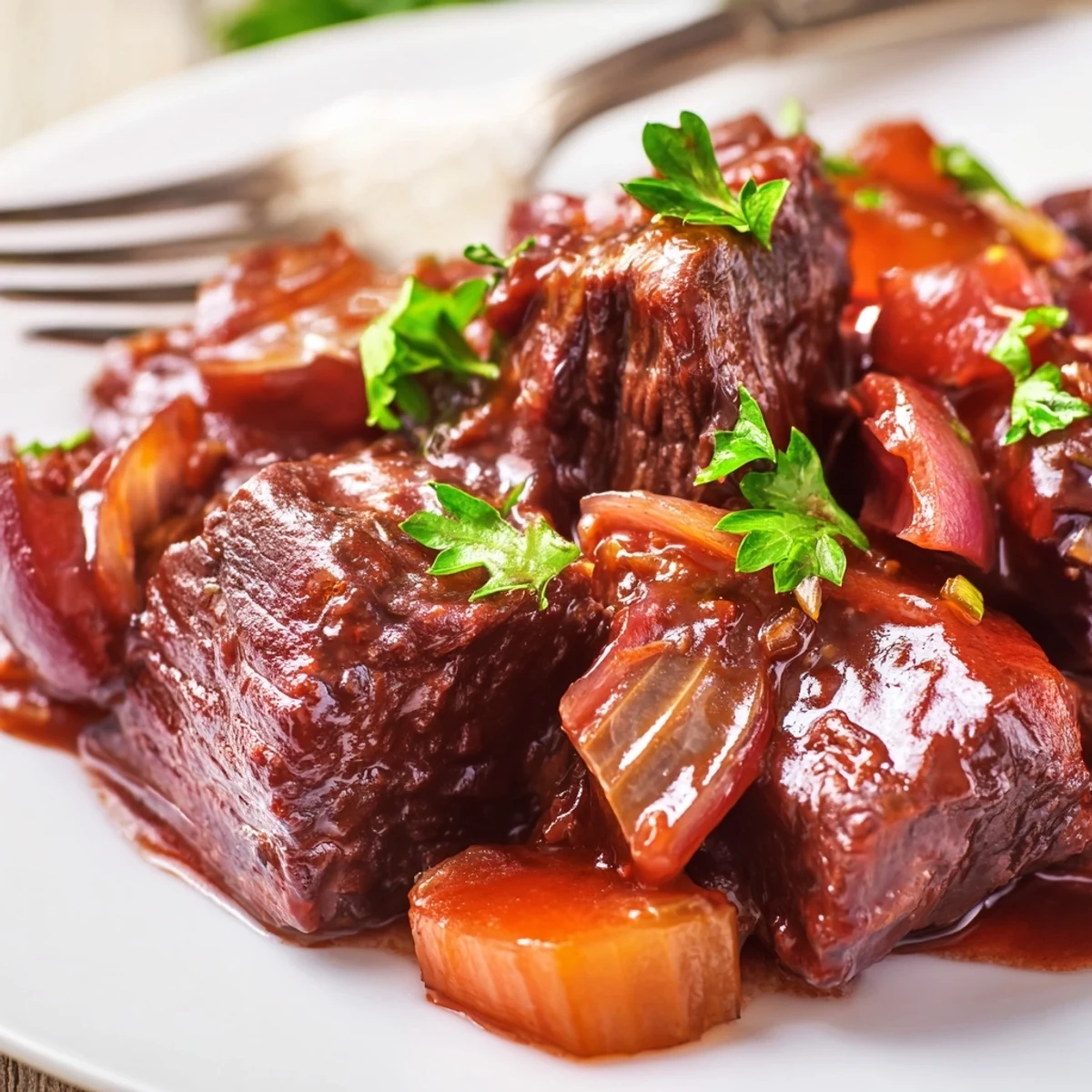
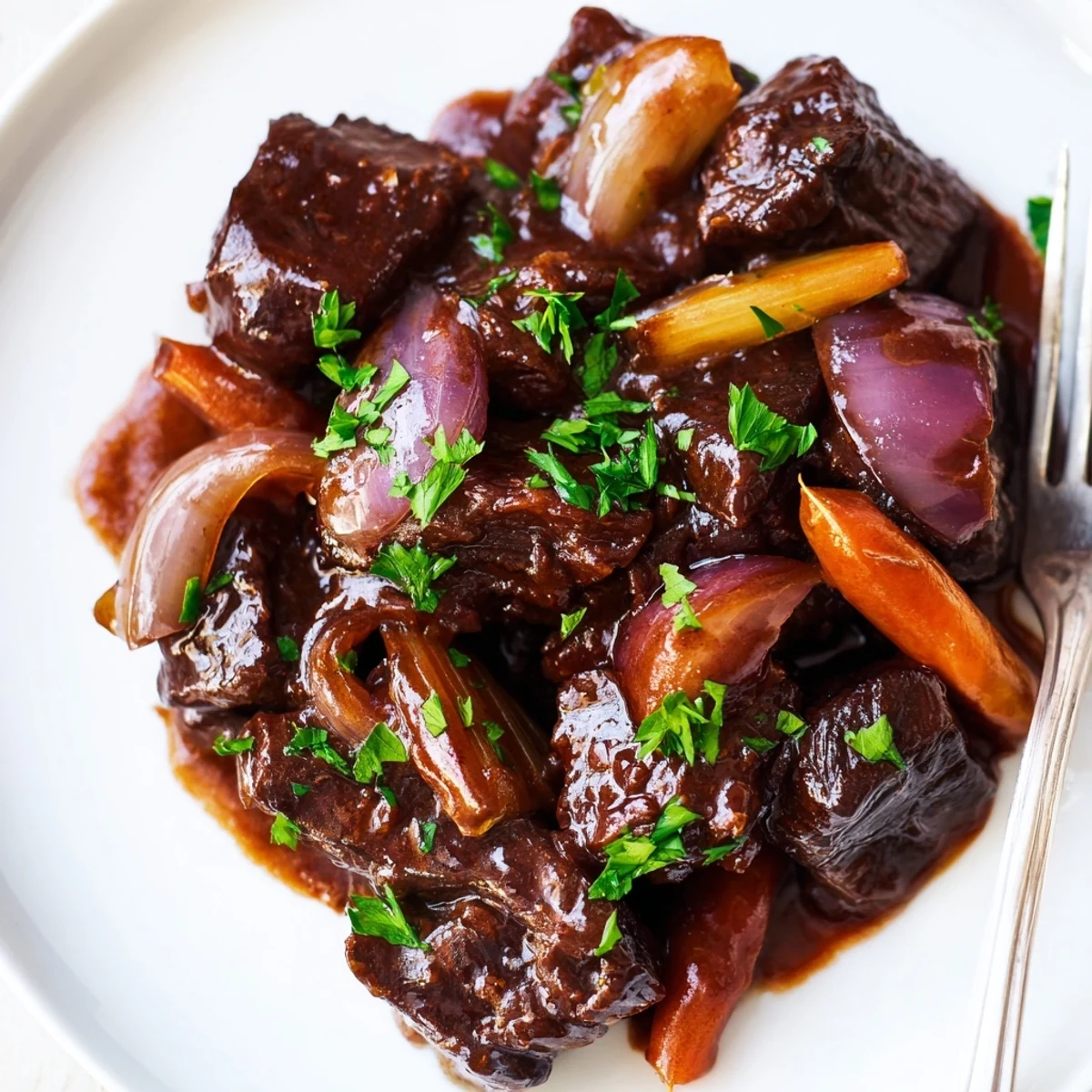
Save This dish features beef chuck slowly cooked to tenderness alongside sweet red onions and aromatic herbs. Searing the beef first enhances depth, while a red wine and beef stock base builds a rich sauce. The braising process melds flavors and softens the meat, resulting in a hearty, satisfying meal perfect with mashed potatoes or crusty bread. Garnish with fresh parsley to add brightness and finish the comforting plate.
The first time I made beef chuck braised in red wine, I wasn't trying to impress anyone—I just had a beautiful piece of meat and a rainy Sunday afternoon stretching ahead of me. My grandmother's Dutch oven had been sitting in my cabinet for months, and something about the weather made me want to fill the kitchen with the smell of slow-cooking beef and wine. Three hours later, when I lifted that lid, the transformation was complete: tough cubes of chuck had become so tender they practically dissolved on my tongue.
I made this for my partner one winter when they'd had a rough week, and watching them take that first bite—then immediately go quiet in that way that means the food is doing its job—reminded me why I cook. It's not about following steps perfectly; it's about turning time and heat and a handful of simple ingredients into something that makes someone feel seen.
Ingredients
- Beef chuck (1.5 kg / 3.3 lbs, cut into large cubes): This cut is marbled with fat that melts during braising, making it far more forgiving and flavorful than lean beef—don't waste money on a premium cut here.
- Red onions (3 large, sliced): The natural sugars in red onions caramelize during cooking, creating a subtle sweetness that balances the wine's acidity; white onions will be sharper and less interesting.
- Garlic (3 cloves, minced): Add it after the onions soften so it doesn't burn and turn bitter in the hot oil.
- Carrots and celery (2 each, sliced): These are your flavor foundation, adding body and subtle sweetness; don't skip them even if you think you will.
- Dry red wine (400 ml / 1 2/3 cups): Use something you'd actually drink—cheap wine means cheap-tasting braise, but you don't need to spend more than ten dollars.
- Beef stock (500 ml / 2 cups): Homemade is ideal, but good quality store-bought works; avoid the ultra-salty versions that will throw off your seasoning.
- Tomato paste (2 tbsp): This adds depth and umami without being obvious; it's the secret ingredient that makes people ask what they're tasting.
- Bay leaves and fresh thyme (2 and 4 sprigs): Fresh thyme tastes brighter than dried; if you only have dried, use half the amount and be gentle with it.
- Olive oil (3 tbsp): You need enough to properly sear the beef without crowding the pan—don't skimp.
- Salt and freshly ground black pepper: Taste as you go; you'll need more salt than you think because the braising liquid absorbs it.
Instructions
- Get your oven ready and prep the beef:
- Preheat to 160°C (325°F) while you pat the beef completely dry with paper towels—any moisture on the surface will steam rather than sear. Season generously with salt and pepper, rubbing it in so it actually sticks to the meat.
- Sear the beef in batches:
- Heat the olive oil until it's almost smoking, then add beef in a single layer without crowding. Resist the urge to move it around; let each side develop a deep brown crust for 3–4 minutes before flipping. This takes patience, but it's where all the flavor comes from.
- Build your flavor base:
- In the same pot, sauté the onions, carrots, and celery over medium heat for 8–10 minutes until the onions turn soft and golden at the edges. You'll notice the sweetness as they caramelize; that's exactly what you want.
- Add garlic and tomato paste:
- Stir them in and let them cook for exactly 2 minutes, just long enough to become fragrant but not so long that they burn. This is a quick step, but it's essential.
- Deglaze with wine:
- Pour in the red wine and use a wooden spoon to scrape up all those crusty brown bits stuck to the bottom—that's pure flavor you don't want to waste. Bring it to a gentle simmer, which takes about 3–5 minutes.
- Build the braise:
- Return the beef to the pot along with the stock, bay leaves, and thyme. Stir everything together and let it come to a light simmer on the stovetop before covering and moving to the oven.
- Let time do the work:
- Braise in the preheated oven for 2 to 2.5 hours, checking occasionally but trying not to disturb it too much. You'll know it's done when the beef falls apart at the slightest pressure from a fork.
- Final touches:
- Remove the bay leaves and thyme sprigs, taste the sauce, and adjust the seasoning with salt and pepper. If the sauce seems thin, you can simmer it on the stovetop for a few minutes to reduce and concentrate the flavors.
 Save
Save There's something almost meditative about braising: you do the active work upfront, then the oven becomes your collaborator, transforming raw ingredients into something transcendent while you're free to do anything else. It's the kind of cooking that rewards patience and teaches you that the best things rarely rush.
Serving Suggestions That Make It Complete
I've served this over creamy mashed potatoes, polenta, crusty bread sopped in sauce, and even egg noodles on nights when I wanted something comforting and simple. The sauce is too good not to have something underneath it to catch every drop—whatever you choose, make sure it can stand up to bold, rich flavors.
Variations and Substitutions
Shallots can replace red onions if you prefer a more delicate onion flavor, though you'll lose some of that deep sweetness. A knob of butter stirred in at the very end rounds out the sauce and adds shine, though it's entirely optional. I once used Burgundy wine instead of a generic red, and the earthiness it brought was memorable enough that I still think about it.
Make It Your Own
This is a forgiving recipe that adapts well to what you have on hand and what you're in the mood for. The formula—meat, aromatics, acid, heat, time—is solid enough that small changes won't derail you, and that's what makes braising such a reliable technique to master.
- If your beef stock is particularly salty, reduce the amount by 100 ml and add water instead.
- Fresh rosemary can work alongside or instead of thyme, though use it more sparingly since it has a stronger flavor.
- Let the braise cool completely before refrigerating so condensation doesn't water down the sauce; skim any fat from the top the next day if you prefer a leaner dish.
 Save
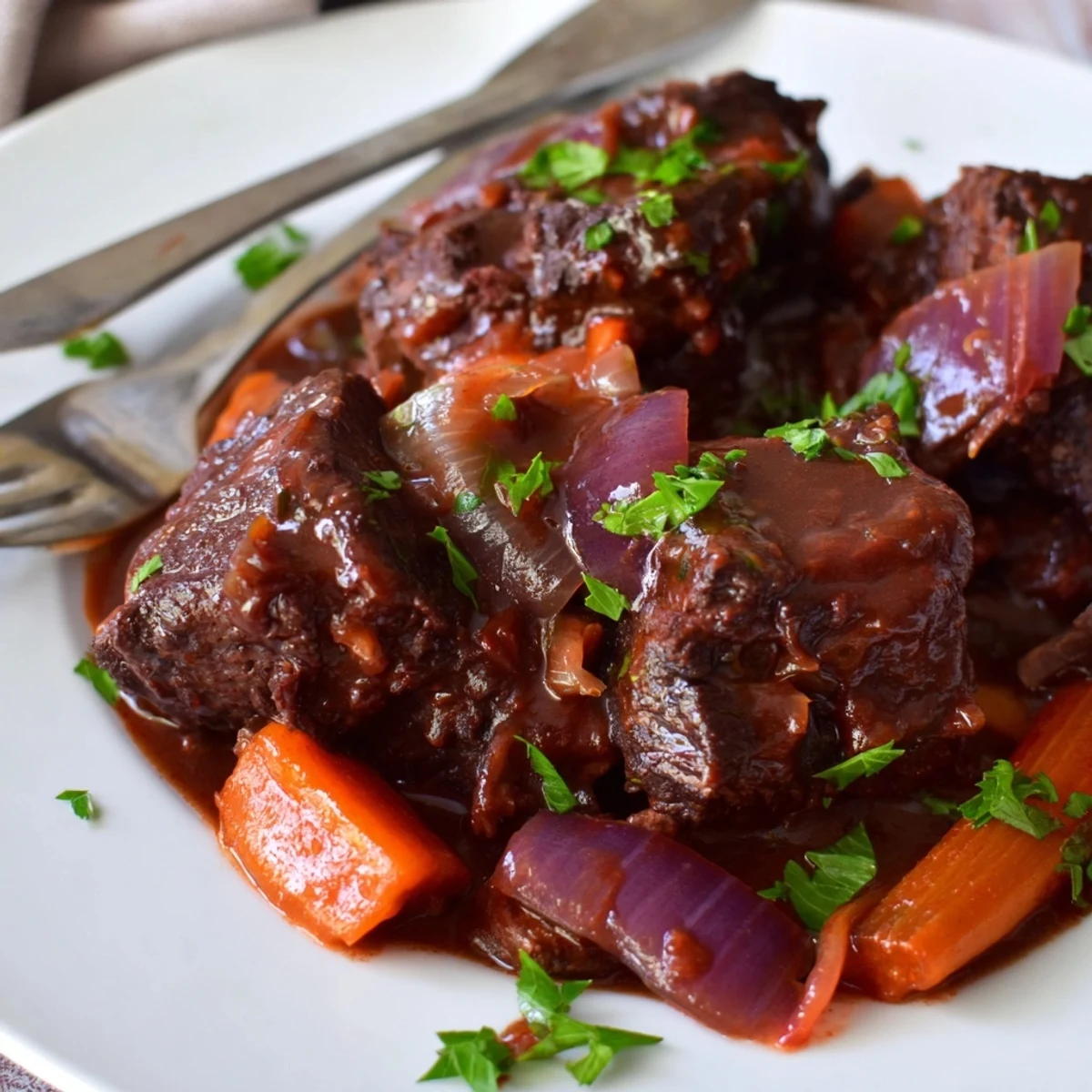
Save This braised beef isn't fancy, but it's honest and deeply satisfying—the kind of dish that reminds you why people have been cooking meat with wine and vegetables for centuries. Make it once, and it will become a staple you return to whenever you need something that feels like home.
Recipe FAQs
- → How do you achieve tender beef chuck in this dish?
-
Slow braising at a low oven temperature breaks down the connective tissues, making the beef fork-tender and flavorful.
- → Can I substitute the red onions with another vegetable?
-
Shallots can be used instead for a milder, slightly sweeter flavor profile.
- → What wine is best for the red wine sauce?
-
Dry, full-bodied reds like Cabernet Sauvignon or Merlot complement the rich sauce well.
- → Why is browning the beef important before braising?
-
Searing the beef develops deeper flavors through caramelization and adds richness to the final dish.
- → What side dishes pair well with this main course?
-
Creamy mashed potatoes, polenta, or crusty bread help soak up the savory braising sauce perfectly.