
 Save
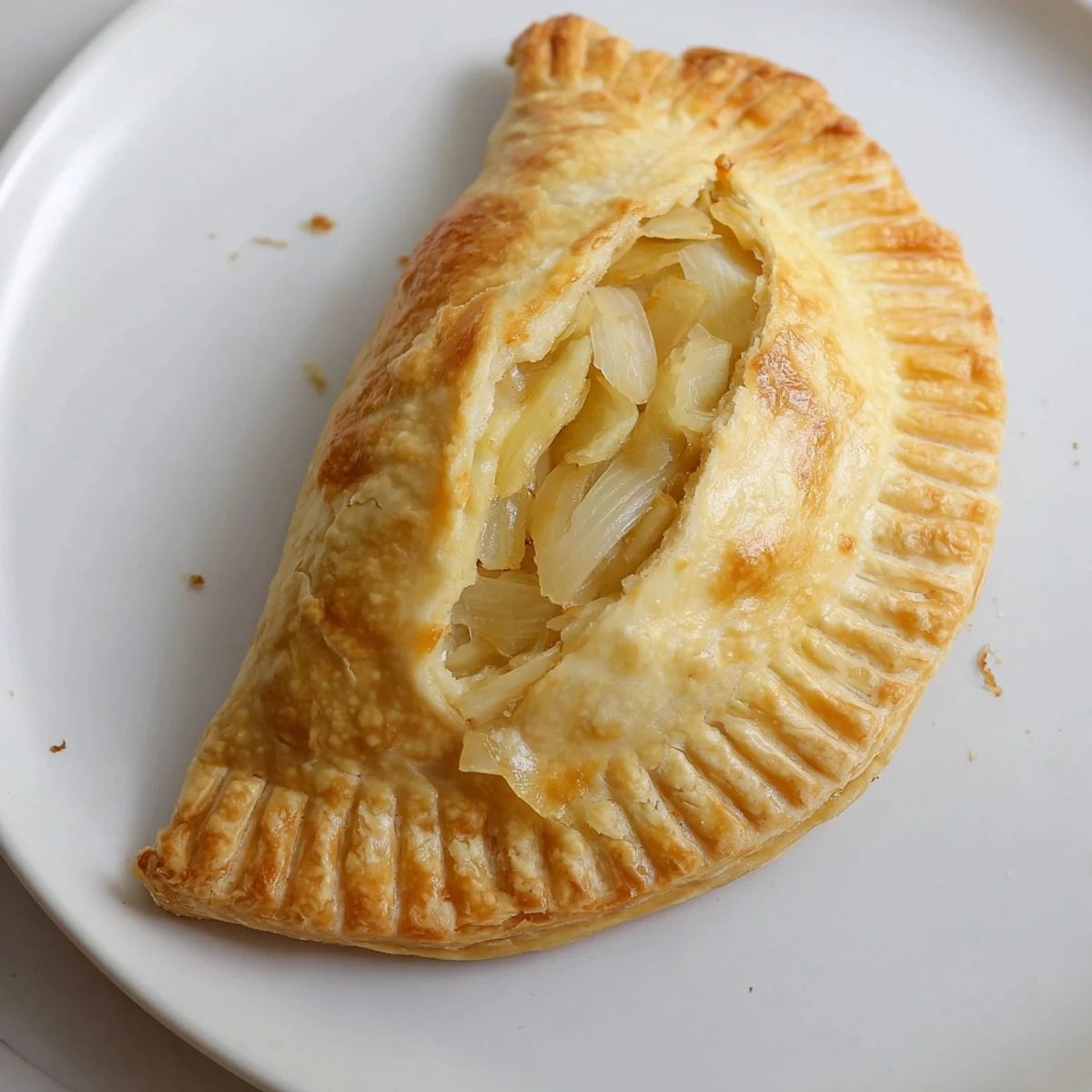
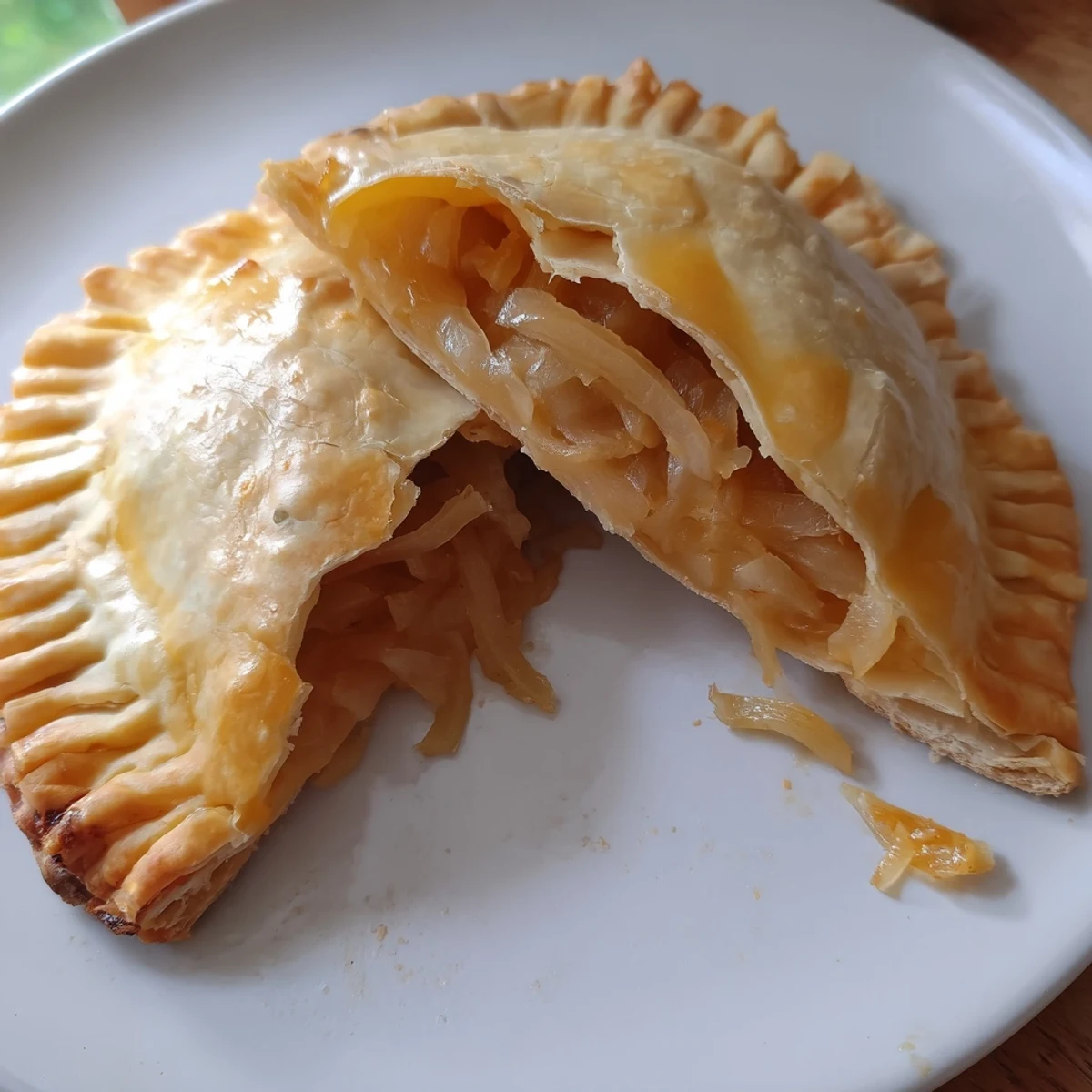
Save This dish features a crisp pastry shell wrapped around a filling of melted cheddar, cream cheese, and gently cooked onions. Combining sharp and creamy textures, with hints of mustard and fresh herbs, each pasty offers a satisfying balance of flavors. Baked to a golden crisp, it’s ideal warm or at room temperature, making it versatile for meals or on-the-go snacks.
I found this recipe scribbled on a damp napkin at a farmers market in Cornwall, handed to me by a baker with flour still on her knuckles. She told me the secret was in the slow-cooked onions and not skimping on the cheese. I made them that same week, and the smell alone had my neighbor knocking at the door.
I used to make a double batch on Sunday mornings and freeze half before baking. My youngest would grab one cold from the fridge after school, not even bothering to heat it up. The pastry stayed crisp for days, and the filling never turned soggy or bland.
Ingredients
- All-purpose flour: Forms the base of the pastry, and using cold butter helps create those flaky, tender layers that shatter when you bite in.
- Cold unsalted butter: Cubed and worked in quickly so it stays firm, this is what gives the pastry its golden crispness and rich flavor.
- Salt: Just enough in the dough to balance the buttery richness and bring out the savory notes of the filling.
- Cold water: Brings the dough together without making it sticky, and keeping it ice-cold prevents the butter from melting too soon.
- Egg: Beaten and brushed over the top, it gives the pasties that glossy, bakery-style shine and helps them turn a deep golden brown.
- Onions: Cooked low and slow until they turn sweet and almost jammy, they form the soul of the filling and pair perfectly with sharp cheese.
- Mature cheddar cheese: The sharper the better, it melts into the onions and adds a bold, tangy punch that holds its own against the buttery pastry.
- Cream cheese: Adds creaminess and body to the filling, keeping it from being too dry or crumbly when you cut into the pasty.
- English mustard: A small spoonful wakes up the whole filling with a gentle heat and slight bitterness that cuts through the richness.
- Black pepper: Freshly ground adds a subtle warmth and depth that complements the cheese without overwhelming it.
- Fresh chives or parsley: Optional, but they bring a bright, herbal note that keeps the filling from feeling too heavy.
Instructions
- Make the pastry:
- Rub the flour, salt, and cold butter together with your fingertips until it looks like coarse sand, then drizzle in the cold water a tablespoon at a time until the dough just comes together. Shape it into a flat disk, wrap it tightly, and chill it for at least 20 minutes so it rolls out easily without shrinking.
- Cook the onions:
- Melt the butter in a skillet over medium heat, add the sliced onions, and cook them gently for 8 to 10 minutes, stirring occasionally until they soften and turn translucent but not browned. Let them cool slightly before mixing them with the cheese so the filling does not turn greasy.
- Prepare the filling:
- In a bowl, combine the cooked onions, grated cheddar, cream cheese, mustard, pepper, salt, and herbs if using, stirring until everything is evenly mixed and creamy. Taste it and adjust the seasoning if needed, keeping in mind the pastry is unsalted.
- Preheat and prep:
- Set your oven to 200 degrees Celsius and line a baking tray with parchment paper. This ensures the pasties bake evenly and do not stick to the pan.
- Roll and cut the dough:
- On a lightly floured surface, roll out the chilled pastry to about 3 millimeters thick, then use a plate or cutter to cut out four circles roughly 18 centimeters across. Work quickly so the butter stays cold and the pastry remains tender.
- Fill the pasties:
- Spoon a generous portion of the cheese and onion mixture onto one half of each circle, leaving a 1 centimeter border around the edge. Brush the edges with beaten egg to help seal them tightly.
- Seal and crimp:
- Fold the pastry over to form a half-moon shape, press the edges firmly together, then crimp with a fork to create a tight seal. This keeps the filling from leaking out during baking.
- Glaze and vent:
- Brush the tops of the pasties with more beaten egg for a glossy finish, then use a sharp knife to make a small slit in the top of each one. The slit lets steam escape and prevents the pastry from puffing up too much.
- Bake:
- Place the pasties on the prepared tray and bake for 30 to 35 minutes, or until they turn a deep golden brown and the pastry feels crisp when you tap it. Let them cool on the tray for a few minutes before transferring to a rack.
 Save
Save One rainy afternoon, I made these with my sister while we waited for the storm to pass. We ate them straight from the oven, standing at the counter with the windows fogged up, and I remember thinking nothing tastes better than warm pastry and melted cheese when the world feels cold outside.
Storing and Reheating
These pasties keep well in the fridge for up to three days, wrapped tightly in foil or stored in an airtight container. Reheat them in a 180 degree oven for about 10 minutes to bring back the crispness, or eat them cold if you prefer. I have also frozen unbaked pasties on a tray, then transferred them to a freezer bag once solid, and baked them straight from frozen, adding an extra 5 to 10 minutes to the cooking time.
Serving Suggestions
I like to serve these with a simple green salad dressed in lemon and olive oil, or alongside tangy pickles and a dollop of chutney. They also pair beautifully with a mug of hot soup on a chilly day, or wrapped in parchment and tucked into a lunchbox for a satisfying midday meal. If you are feeding a crowd, set out a platter of pasties with a few dipping sauces like mustard or tomato relish, and watch them disappear.
Customizing the Filling
You can swap some of the onions for leeks to mellow the flavor, or add a handful of sauteed mushrooms for an earthy twist. A crumble of blue cheese mixed into the cheddar gives a sharper, more pungent bite, and finely chopped cooked bacon or ham turns these into a heartier, non-vegetarian version. I have also stirred in a spoonful of caramelized onion chutney for extra sweetness and depth.
- Try adding a pinch of smoked paprika to the filling for a subtle smoky warmth.
- Brush the pasties with milk instead of egg for a lighter, matte finish.
- Use whole wheat flour for half the pastry to add a nutty flavor and extra texture.
 Save
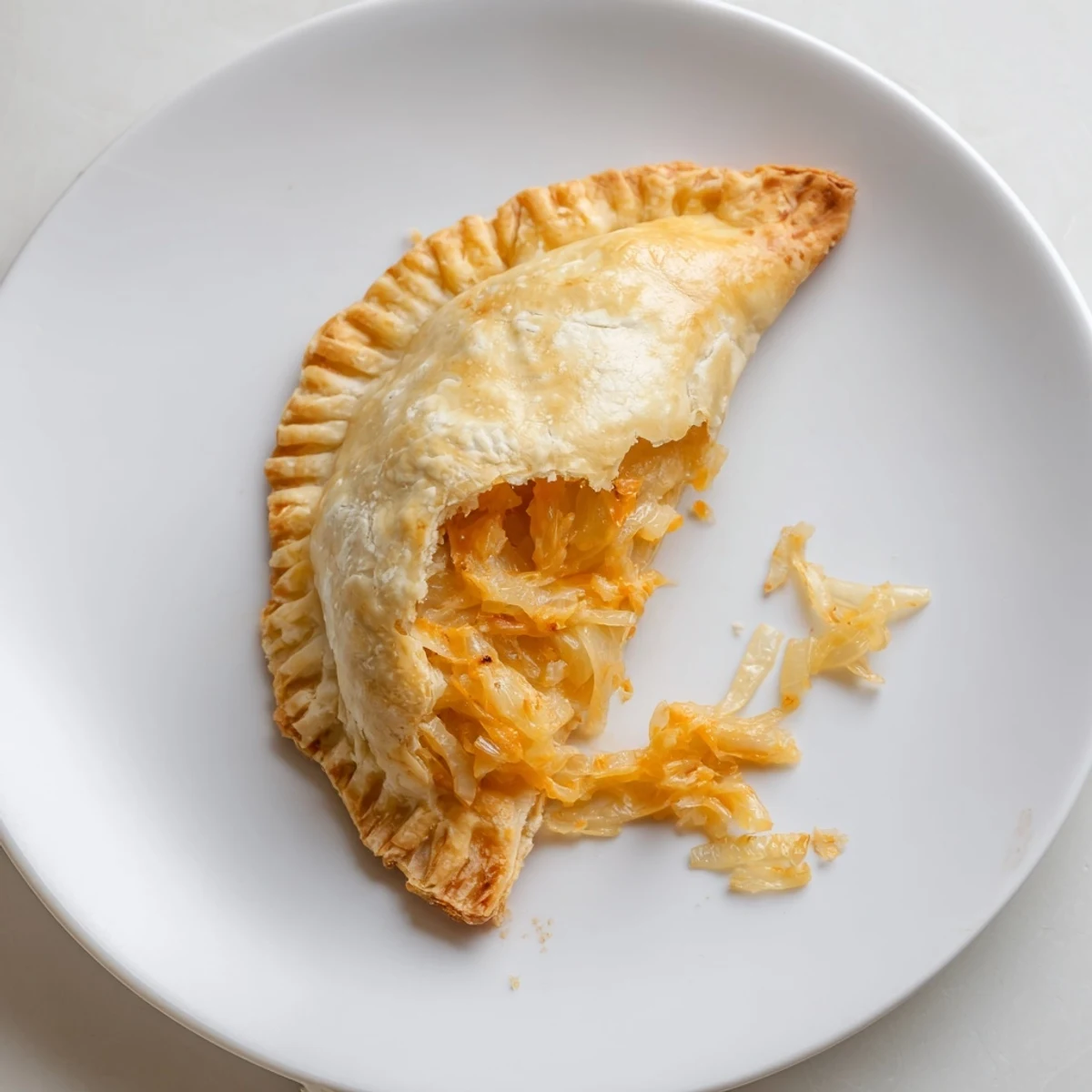
Save These pasties have become my go-to whenever I need something comforting, portable, and full of flavor. I hope they fill your kitchen with the same warm, buttery smell and give you a reason to linger at the table a little longer.
Recipe FAQs
- → How do I make the pastry flaky?
-
Use cold butter and rub it into the flour until it resembles breadcrumbs. Add cold water gradually and handle the dough minimally to keep it tender and flaky.
- → What’s the best way to cook onions for the filling?
-
Cook onions gently over medium heat until soft and translucent, avoiding browning to maintain a sweet, mellow flavor.
- → Can I substitute the cheeses used here?
-
Yes, for a sharper taste, you can add crumbled blue cheese or use different types of aged cheddar according to preference.
- → How do I prevent the pastry from becoming soggy?
-
Ensure the filling is cooled before assembling and create a small slit on top of each pasty to release steam during baking.
- → What herbs work best with the cheese and onion filling?
-
Fresh chives or parsley add a bright herbal note that complements the richness of the cheese and sweetness of onions.