
 Save
Save This homemade dandelion jelly transforms bright yellow petals into a delicate, floral spread perfect for spring. After simmering fresh petals in water and steeping to extract their essence, the infused liquid is combined with lemon juice, pectin, and sugar to create a gently set jelly with a radiant golden hue. The entire process takes about an hour, yielding roughly four half-pint jars that pair beautifully with soft cheeses, warm scones, or layered into cakes.
My neighbor asked why I was crawling around the front yard with a colander, and honestly I didn't have a great answer beyond curiosity about whether those golden weeds could actually become something worth eating.
I brought a small jar to a brunch last April and watched three friends go from skeptical to asking for the recipe before their second piece of toast.
Ingredients
- 4 cups fresh dandelion flowers: Only the yellow petals matter here because any green parts add bitterness that no amount of sugar can fix, so take the extra few minutes to snip them off
- 4 cups water: This becomes your infusion base and the quality of the final color depends on how fully the petals release into it
- 2 tablespoons lemon juice: Fresh squeezed brightens the floral notes and helps the pectin do its job properly
- 1.5 to 2 cups granulated sugar: I started with less and ended up adding more because the softer set felt too wobbly, so aim for the higher end if you want a proper jelly texture
- 1 package fruit pectin: This is what turns flower tea into actual jelly so do not skip it or try gelatin substitutions
Instructions
- Pull the petals apart:
- Rinse the flowers gently then pinch off the green base of each head, keeping only the bright yellow florets. This is the tedious part but it makes or breaks the flavor.
- Brew the dandelion tea:
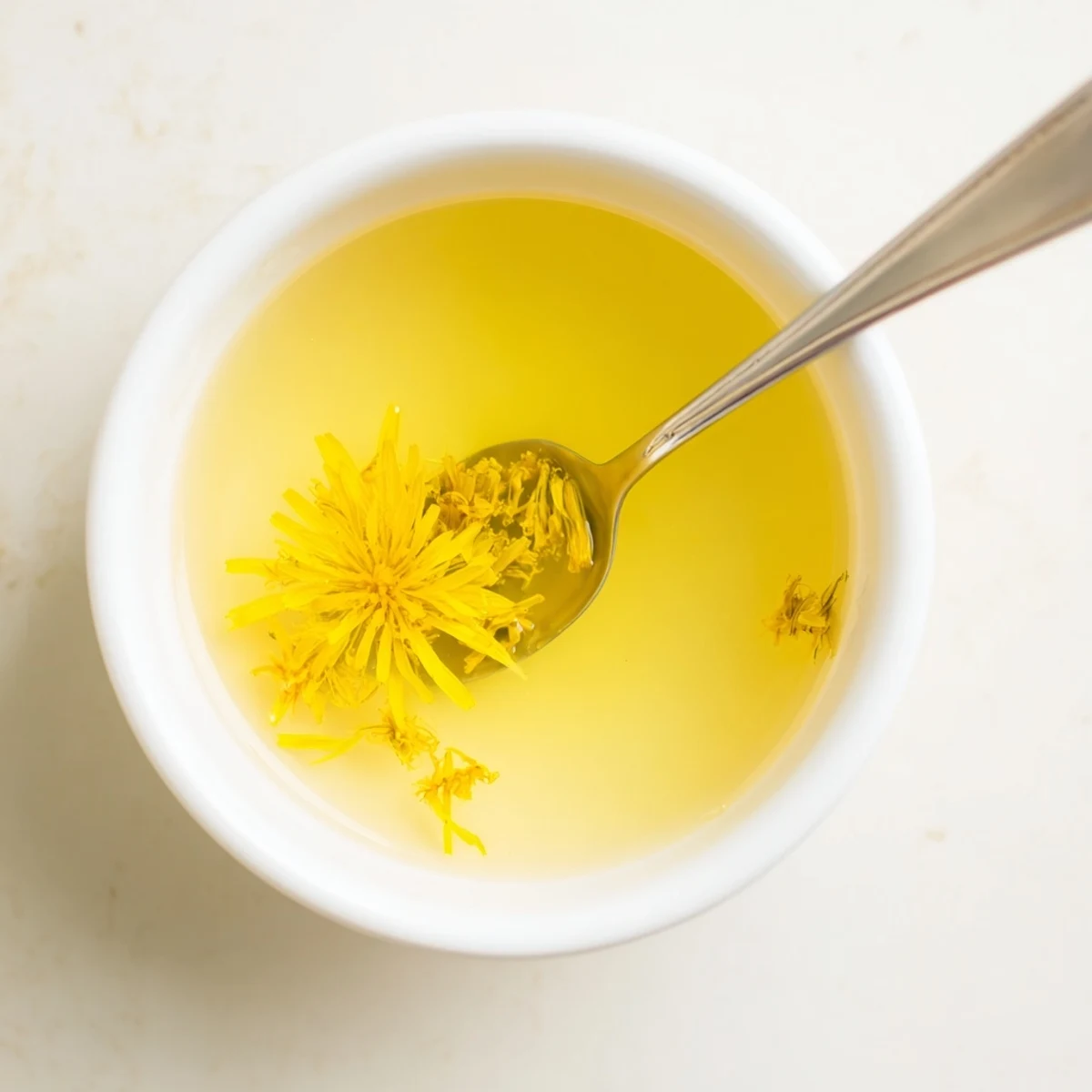
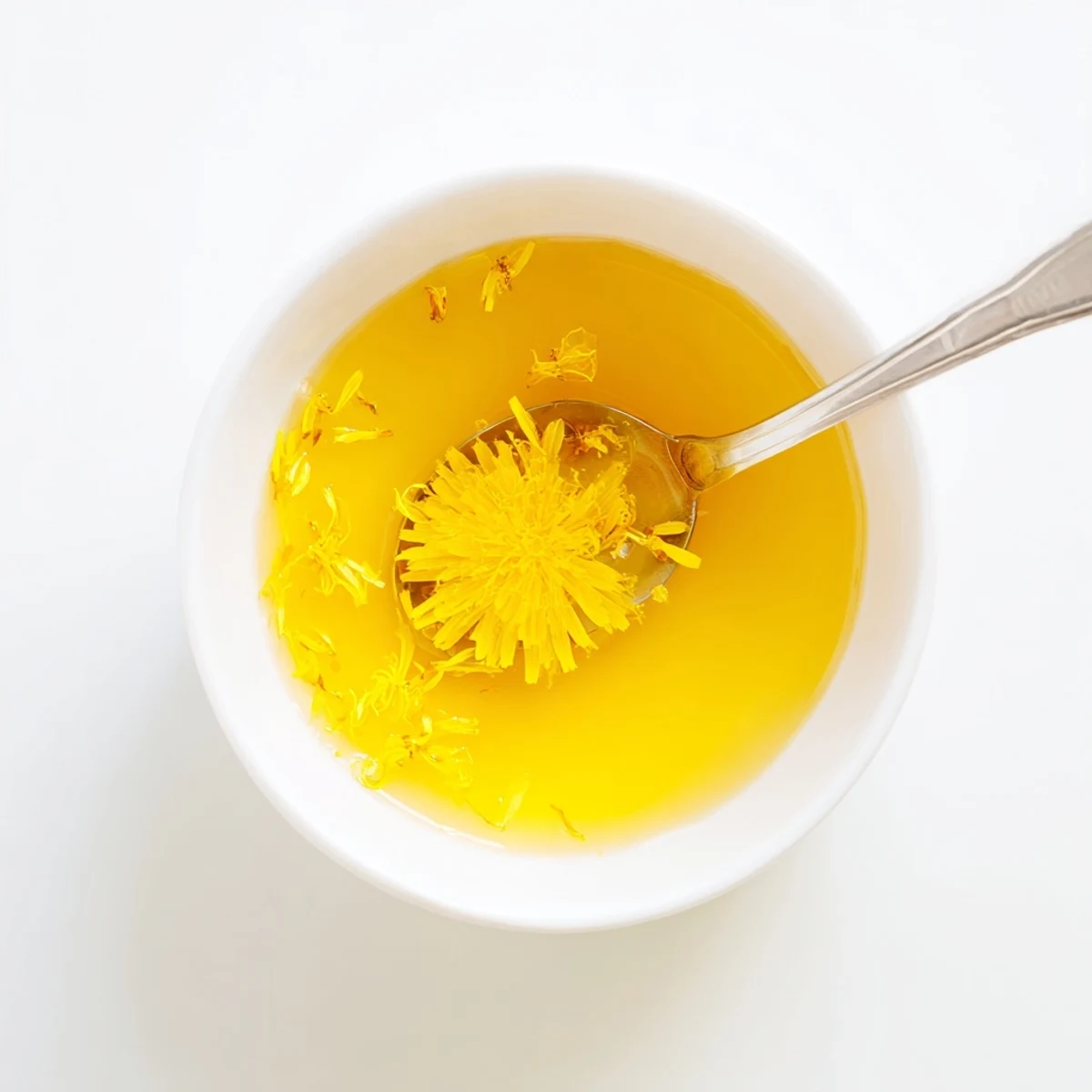
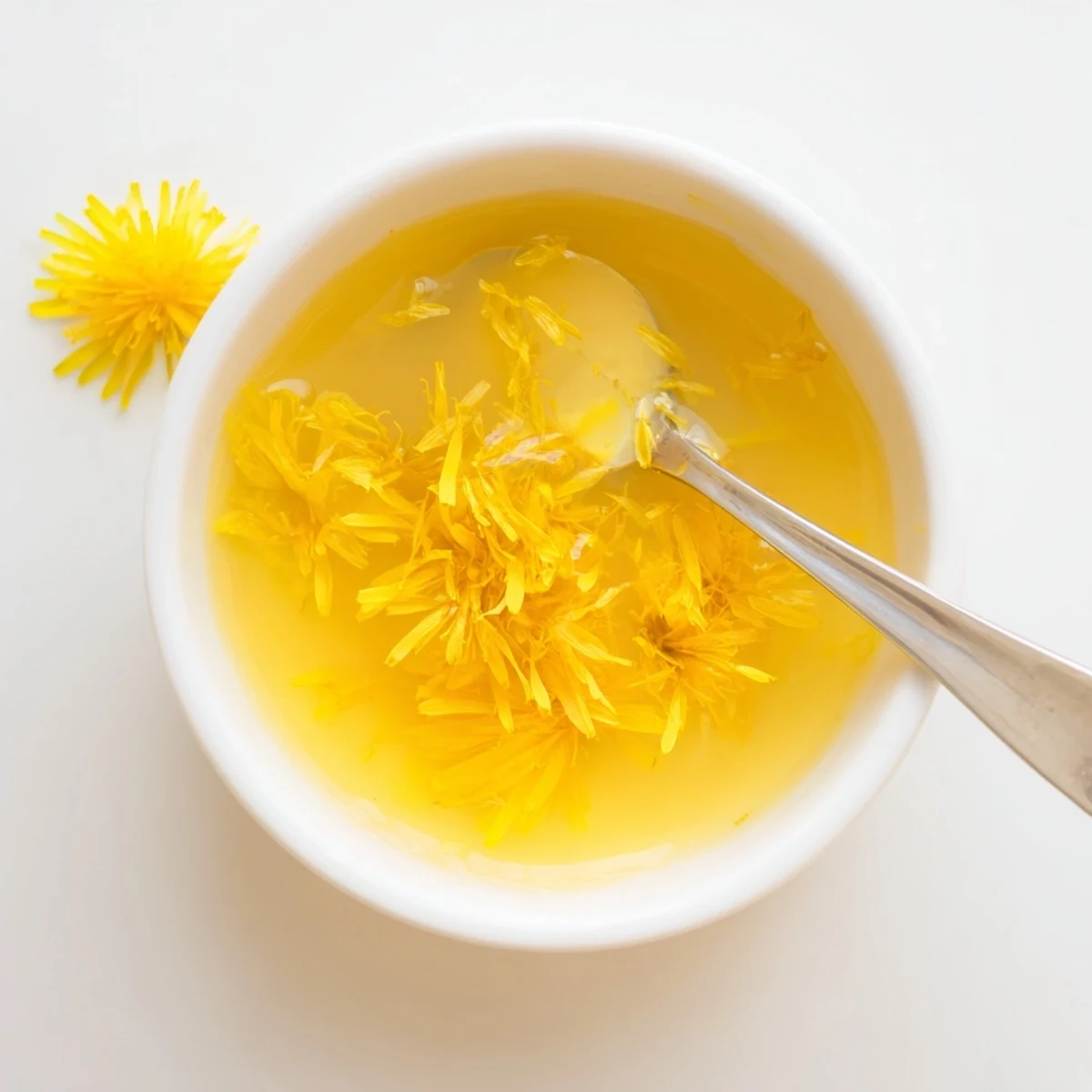
- Combine petals and water in a saucepan, bring to a boil, then drop to a simmer for 10 minutes. Your kitchen will smell like a meadow.
- Let it steep:
- Remove from heat and walk away for 30 minutes so the petals give up every bit of their golden essence.
- Strain out the petals:
- Pour everything through a fine mesh sieve or cheesecloth, pressing firmly to extract all the liquid. You should have about 3 cups of amber infusion.
- Start the jelly:
- Pour the liquid into a clean pot, stir in lemon juice and pectin, then bring to a full rolling boil while stirring without stopping.
- Add the sugar:
- Dump it all in at once, return to a rolling boil, and hold it there for 1 to 2 minutes. The mixture will transform from thin to glossy right before your eyes.
- Jar it up:
- Skim the foam off the top, then ladle the hot jelly into sterilized jars with a quarter inch of headspace and seal immediately.
- Process or chill:
- Either process in a boiling water bath for 10 minutes for shelf storage or just pop them in the fridge if you plan to share them quickly.
 Save
Save My mom opened her jar without reading the label and spent a full minute trying to guess what flower it was before I finally told her she was eating weeds from my lawn.
Getting the Best Color
My first batch came out pale yellow and a little sad looking. I learned that picking flowers in full afternoon sun and tossing in a few calendula petals during steeping pushes the color into a rich warm gold that actually looks like it belongs in a jar.
Pairing Ideas Beyond Toast
Someone at that same brunch dolloped it over a wheel of brie and the combination was so good I went quiet for a solid minute. It also works folded into whipped cream as a cake filling or stirred into plain yogurt for an easy spring dessert.
Storage and Gifting Tips
Unprocessed jars last about three weeks in the fridge while water bath sealed ones keep for up to a year in a cool dark spot. I tie a small sprig of lavender around the lid when gifting because it makes people feel like they received something special before they even open it.
- Label every jar with the date because this jelly looks so different from commercial ones that people genuinely forget what it is
- Make a double batch if you plan to gift since four jars disappears faster than you would think
- Always remind recipients to check pectin labels if they have corn allergies since some brands use corn derived ingredients
 Save
Save There is something deeply satisfying about turning lawn weeds into something beautiful enough to give as a gift. Every spring now I find myself scanning the yard with a different kind of appetite.
Recipe FAQs
- → What do dandelion flowers taste like in jelly?
-
Dandelion flowers impart a mild, honey-like floral sweetness with subtle earthy undertones. The resulting jelly is delicate rather than overpowering, making it versatile enough for both sweet and savory pairings.
- → Can I reduce the amount of sugar?
-
Yes, you can adjust sugar to your preference, though less sugar will produce a softer set. If you cut sugar significantly, consider using a low-sugar or no-sugar pectin formulated for reduced sweetener amounts.
- → How long does homemade dandelion jelly last?
-
Properly water-bath processed jars will keep for up to one year in a cool, dark pantry. Once opened, store in the refrigerator and use within three to four weeks for the best flavor and texture.
- → Do I need to remove all the green parts from the flowers?
-
Absolutely. The green sepals and bracts add bitterness that will carry into the finished jelly. Remove them carefully so only the bright yellow petals remain before steeping.
- → Can I add color to the jelly naturally?
-
Adding a few calendula or marigold petals during steeping will deepen the golden color. Avoid artificial food coloring to keep the jelly's natural, rustic quality intact.
- → What's the best way to strain the flower liquid?
-
A fine mesh sieve works well, but layering cheesecloth over the sieve and gently pressing the petals extracts maximum liquid while leaving even fine particles behind for a clear jelly.