
 Save
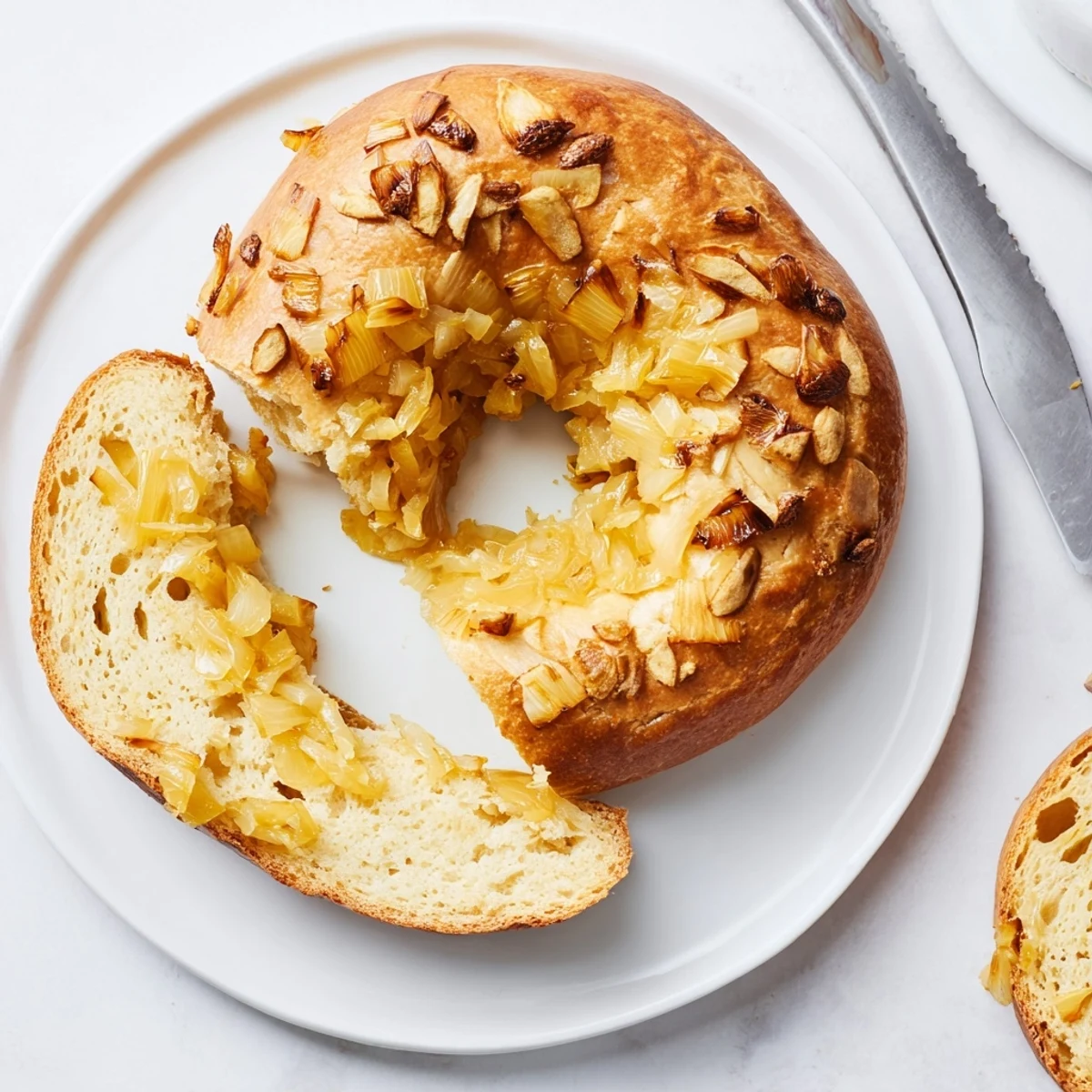
Save Create authentic bakery-style bagels using active sourdough starter for depth of flavor and superior texture. The overnight cold proof develops complex tanginess while ensuring that signature chewy interior and crisp exterior.
Caramelized yellow onions add sweetness that balances the sourdough's natural tang, creating a perfect flavor combination. The barley malt syrup boil gives bagels their professional shiny finish and distinct texture.
This method requires planning ahead—the long fermentation is essential for proper gluten development and flavor. Your patience rewards you with eight bagels that rival any artisan bakery, perfect for breakfast, brunch, or toasted with your favorite spread.
The first time I made sourdough bagels was on a rainy Sunday when my starter was overflowing and I refused to toss even a gram. I decided onion bagels would be my experiment, mostly because I had three yellow onions softening on the counter. The smell of caramelized onions filled the entire apartment, so rich that my roommate came out of her room asking what restaurant I had ordered from. Seeing those golden bagels emerge from the oven, glossy and onion-studded, felt like discovering a secret superpower.
I served these at a brunch last fall, still warm from the oven with a tub of cream cheese I had mixed with fresh chives. My friend Sarah, who claims she does not even like onions that much, went back for thirds. Something about the combination of tangy sourdough crumb and sweet savory onions creates this perfect bite that makes regular bagels seem almost boring.
Ingredients
- Active sourdough starter (100% hydration): This is your flavor engine, so make sure it is bubbly and fed within the last 12 hours
- Bread flour and whole wheat flour: The bread flour provides structure while the whole wheat adds nutty depth
- Warm water: Should feel like bath temperature, around 80°F, to wake up your starter
- Honey: Feeds the yeast and adds subtle sweetness that balances the onions
- Fine sea salt: Do not use coarse salt here as it will not dissolve evenly through the dough
- Yellow onion: Take your time caramelizing, this is where most of the flavor lives
- Olive oil: Helps the onions cook evenly without burning
- Barley malt syrup: The secret ingredient that gives bagels their signature shine and chew, though honey works in a pinch
Instructions
- Caramelize the onions:
- Heat olive oil in a skillet over medium-low heat, add sliced onions with half a teaspoon of salt, and let them cook slowly. Stir occasionally and watch them transform into deep brown jam, about 20 to 25 minutes. Set aside to cool completely.
- Mix the base:
- In a large bowl, dissolve the sourdough starter and honey in the warm water until the mixture looks milky and uniform.
- Build the dough:
- Add both flours and the salt, then mix until a rough shaggy dough forms. Turn it onto a floured surface and knead for 8 to 10 minutes. The dough should push back when you press it and feel smooth like your earlobe.
- First rise:
- Place the dough in a lightly oiled bowl, cover, and let it rest at room temperature for 4 to 6 hours. It should double in size and feel pillowy when you poke it gently.
- Shape into rounds:
- Divide the dough into 8 equal pieces and form each into a tight ball by tucking the edges underneath. Let them rest for 5 minutes to relax the gluten.
- Form the holes:
- Poke your finger through the center of each ball and gently stretch the opening until it is about 2 inches wide. Place on a parchment-lined baking sheet.
- Cold proof overnight:
- Cover loosely and let proof at room temperature for 1 hour, then refrigerate for 8 to 12 hours. This develops flavor and firms the dough for boiling.
- Preheat and prepare the bath:
- Heat your oven to 425°F. Bring 2 liters of water to a gentle boil and whisk in the barley malt syrup or honey until dissolved.
- Boil for the crust:
- Drop 2 or 3 bagels at a time into the water, boiling for 45 seconds per side. They should puff slightly and float to the surface.
- Top and bake:
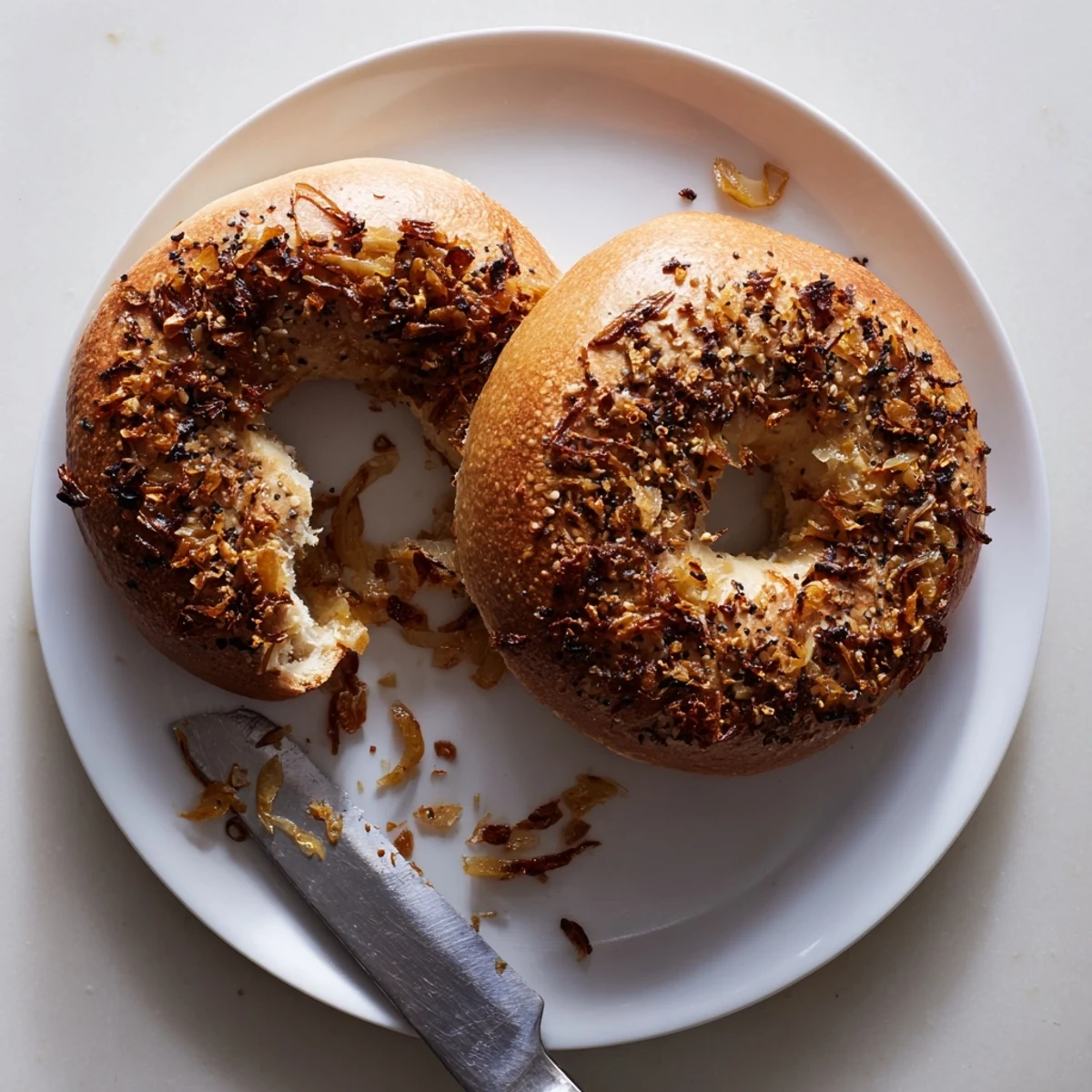
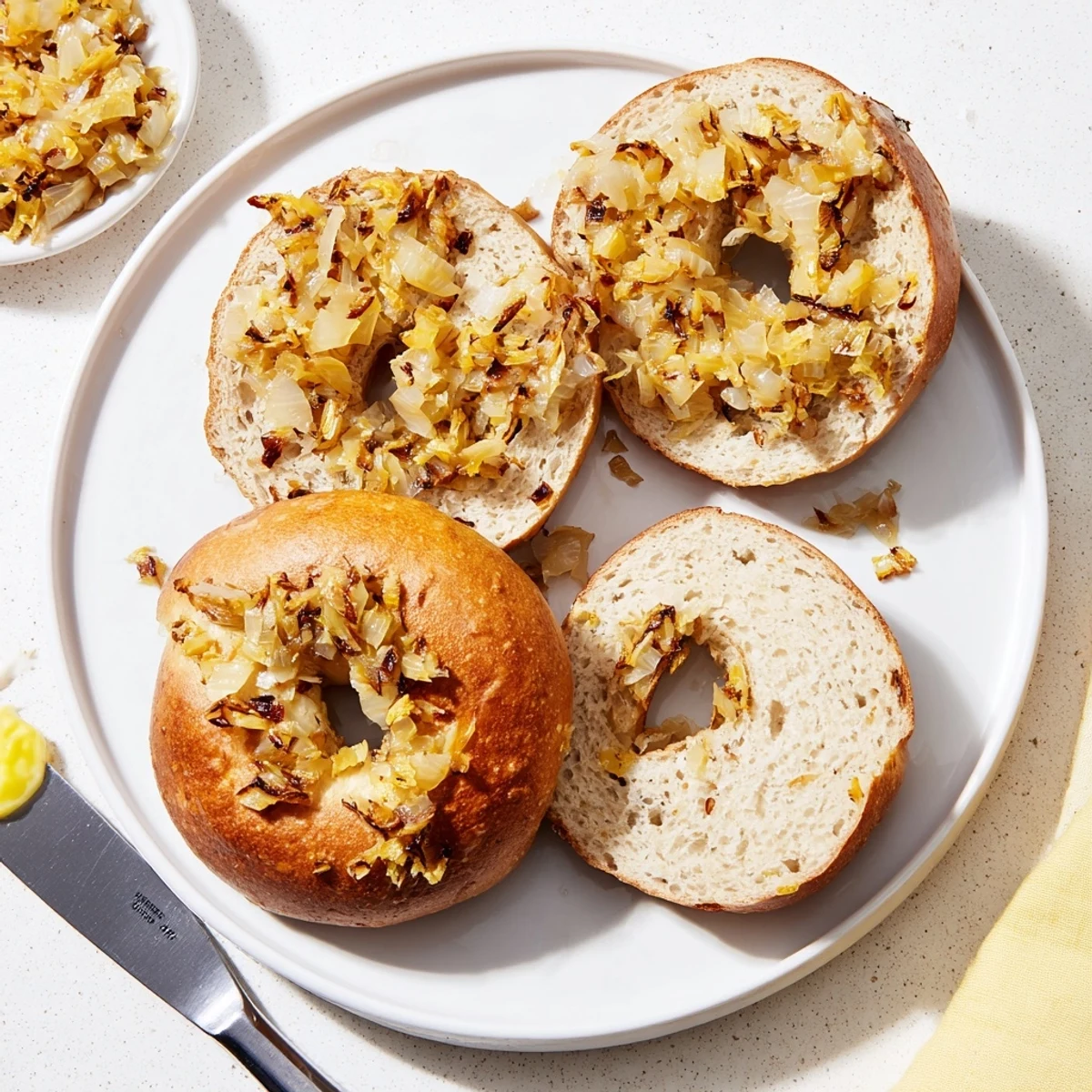
- Return boiled bagels to the baking sheet and immediately press caramelized onions onto the tops. Bake for 20 to 25 minutes until deeply golden and the bottoms sound hollow when tapped.
- Cool completely:
- Let the bagels rest on a wire rack for at least 30 minutes before slicing. This sets the crumb and prevents them from becoming gummy.
 Save
Save These have become my Saturday morning ritual, slicing into one while it is still warm enough to melt whatever I spread on top. There is something deeply satisfying about taking a bite and hitting those sweet sticky onions embedded in the chewy sourdough crumb.
Making Them Ahead
I always double the onion topping and keep the extra in a jar in the refrigerator. It lasts about a week and suddenly elevates scrambled eggs, burgers, or even just toast on busy mornings when you want something special without starting from scratch.
Freezing Tips
Once the bagels are completely cooled, slice them in half before freezing. This lets you pop frozen halves directly into the toaster. I wrap each bagel individually in plastic, then toss them all into a freezer bag where they stay perfect for at least a month.
Serving Ideas
These bagels are substantial enough to stand up to bold toppings without falling apart. I love them with plain cream cheese for contrast, or sliced sharp cheddar and a fried egg for lunch.
- Try them toasted with butter and flaky salt for the simplest version
- Whip cream cheese with fresh herbs or everything bagel seasoning
- Make a breakfast sandwich with avocado and microgreens
 Save
Save There is nothing quite like pulling a batch of these from your own oven, smelling of caramelized onions and sourdough. Homemade bagels have a way of making any morning feel like a celebration.
Recipe FAQs
- → What makes sourdough bagels different from regular ones?
-
Sourdough bagels use fermented starter instead of commercial yeast, resulting in deeper flavor complexity, better digestibility, and a chewier texture that develops over the long fermentation period.
- → Can I skip the overnight refrigeration?
-
The overnight cold proof is crucial for flavor development and texture. Skipping it will result in less chewy bagels with milder taste. Plan ahead for the best authentic bakery results.
- → Why boil bagels before baking?
-
Boiling gelatinizes the surface starch, creating that distinctive shiny exterior and chewy texture. The barley malt syrup or honey aids browning and adds subtle sweetness characteristic of professional bagels.
- → How do I know when my sourdough starter is ready?
-
Your starter should be active, bubbly, and doubled in size 4-6 hours after feeding. It should pass the float test—a small spoonful should float in water, indicating proper fermentation activity.
- → Can I use all-purpose flour instead of bread flour?
-
Bread flour's higher protein content creates the chewy bagel texture. All-purpose flour will work but yields less chewy results. Consider adding vital wheat gluten if substituting.
- → How should I store these bagels?
-
Store at room temperature for 2 days in a paper bag, or freeze sliced bagels for up to 1 month. Toast frozen slices directly—no thawing needed for the best results.