
 Save
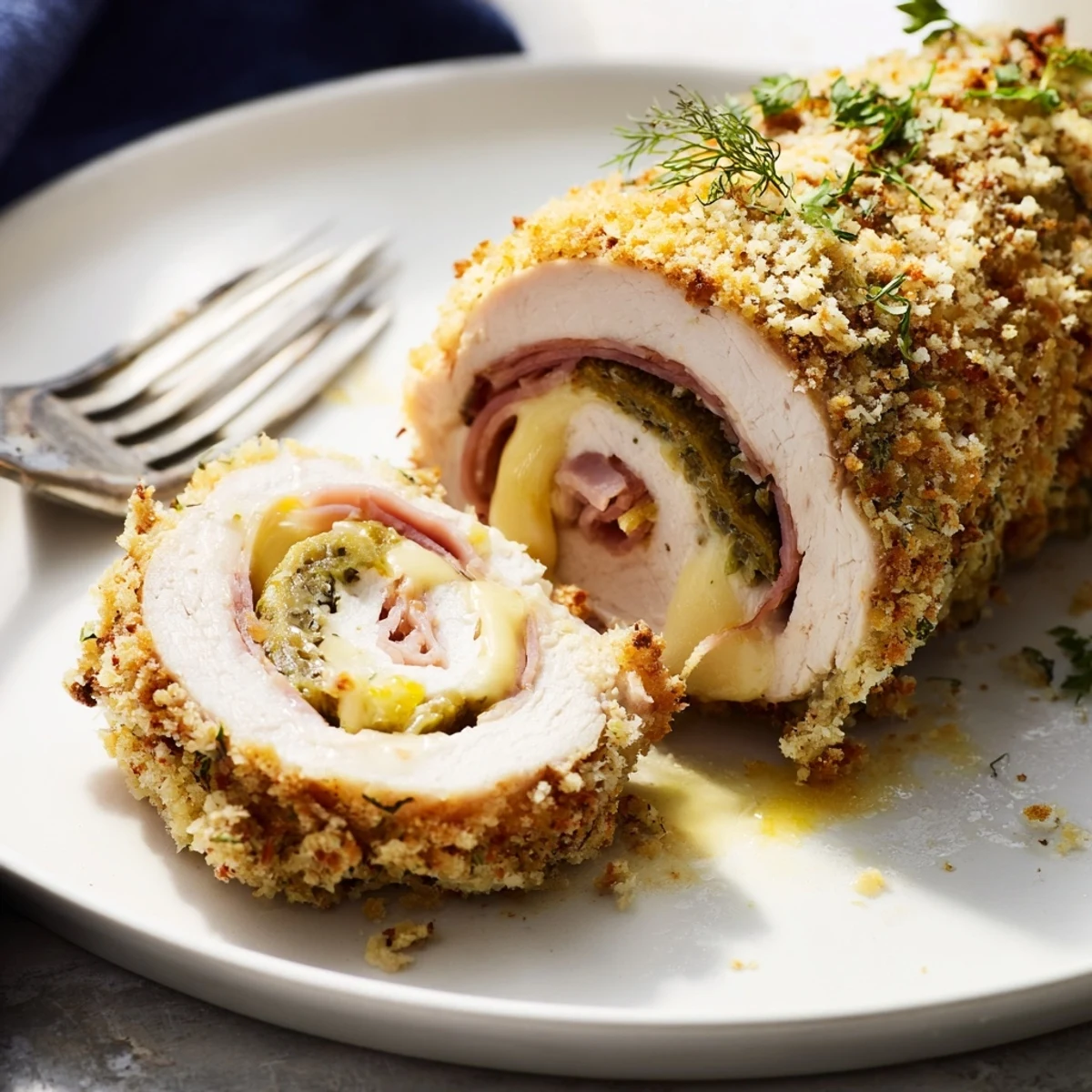
Save Brine chicken breasts in dill pickle juice for 1–4 hours to add tang and tenderness. Butterfly and pound thin, layer with Swiss or provolone, optional ham and fresh herbs, then roll and secure. Dredge in flour, egg and seasoned panko, then shallow-fry briefly to brown and finish in the oven, or bake until golden. Let rest, slice and serve with a simple salad or potato salad.
The smell of pickle juice hit me the wrong way the first time my cousin suggested brining chicken in it, but that skepticism lasted exactly one bite. Now this dish shows up at every family gathering without fail, and people who swore they hated pickles become its loudest defenders. There is something about that tang seeping into the meat that makes the whole thing taste alive.
One rainy Tuesday I decided to test these for a potluck and burned the first batch so badly the smoke alarm serenaded my neighbors for ten solid minutes. I laughed it off, opened every window, and tried again with lower heat, which turned out to be the secret all along. The second batch was so good my partner ate two rolls standing at the counter before they even made it to a plate.
Ingredients
- Pickle juice (1 cup from dill pickles): This is the star of the brine and the entire reason this recipe exists, so use juice from real fermented dill pickles if you can find them.
- Sugar (1 tablespoon): Just enough to round out the sharp acidity of the brine without making anything sweet.
- Black peppercorns (1 teaspoon): They add a gentle warmth to the brine that you will notice in every bite.
- Chicken breasts (4 boneless and skinless): Pounding them thin is the key to rolling without tearing, so do not skip that step.
- Swiss or provolone cheese (4 slices): Swiss gives a nutty melt while provolone goes gooey and mild, and both work beautifully.
- Deli ham (4 slices, optional): A thin layer adds saltiness and body, but you can leave it out entirely.
- Fresh dill or parsley (2 tablespoons chopped): Fresh herbs matter here because they cut through the richness with brightness.
- All-purpose flour (1 cup): The first coat that helps the egg stick, and you can swap in a gluten-free blend if needed.
- Large eggs (2, beaten): The bridge between flour and breadcrumbs, so beat them well until completely smooth.
- Panko breadcrumbs (1.5 cups): These create a shatteringly crisp crust that regular breadcrumbs simply cannot match.
- Garlic powder (1 teaspoon) and smoked paprika (half teaspoon): Mixed into the breadcrumbs for a crust that actually tastes like something.
- Vegetable oil or melted butter (quarter cup): Use oil for frying or drizzle butter over the rolls if you are baking them for extra color.
Instructions
- Brine the chicken:
- Combine the pickle juice, sugar, and peppercorns in a large bowl or resealable bag, then submerge the chicken breasts and refrigerate for at least one hour or up to four hours for deeper flavor.
- Prep and flatten:
- Pat the brined chicken dry with paper towels, butterfly each breast by slicing horizontally almost through the center and opening it like a book, then pound between plastic wrap to a quarter inch thickness.
- Build the rolls:
- Lay a slice of cheese, optional ham, and a generous sprinkle of herbs on each flattened breast, season lightly, then roll tightly tucking the sides inward and securing with toothpicks.
- Set up the breading station:
- Arrange three shallow bowls with flour in the first, beaten eggs in the second, and panko mixed with garlic powder and smoked paprika in the third.
- Coat the rolls:
- Dredge each roll in flour shaking off excess, dip it fully in egg, then press it into the seasoned panko until every surface is well coated.
- Cook until golden:
- For frying, heat oil in a skillet over medium heat and brown the rolls on all sides for about three to four minutes per side before transferring to a baking sheet to finish in a 400 degree oven for fifteen minutes, or for baking only, place on a parchment lined sheet drizzle with butter or oil and bake twenty five to thirty minutes until the internal temperature reaches 165 degrees.
- Rest and serve:
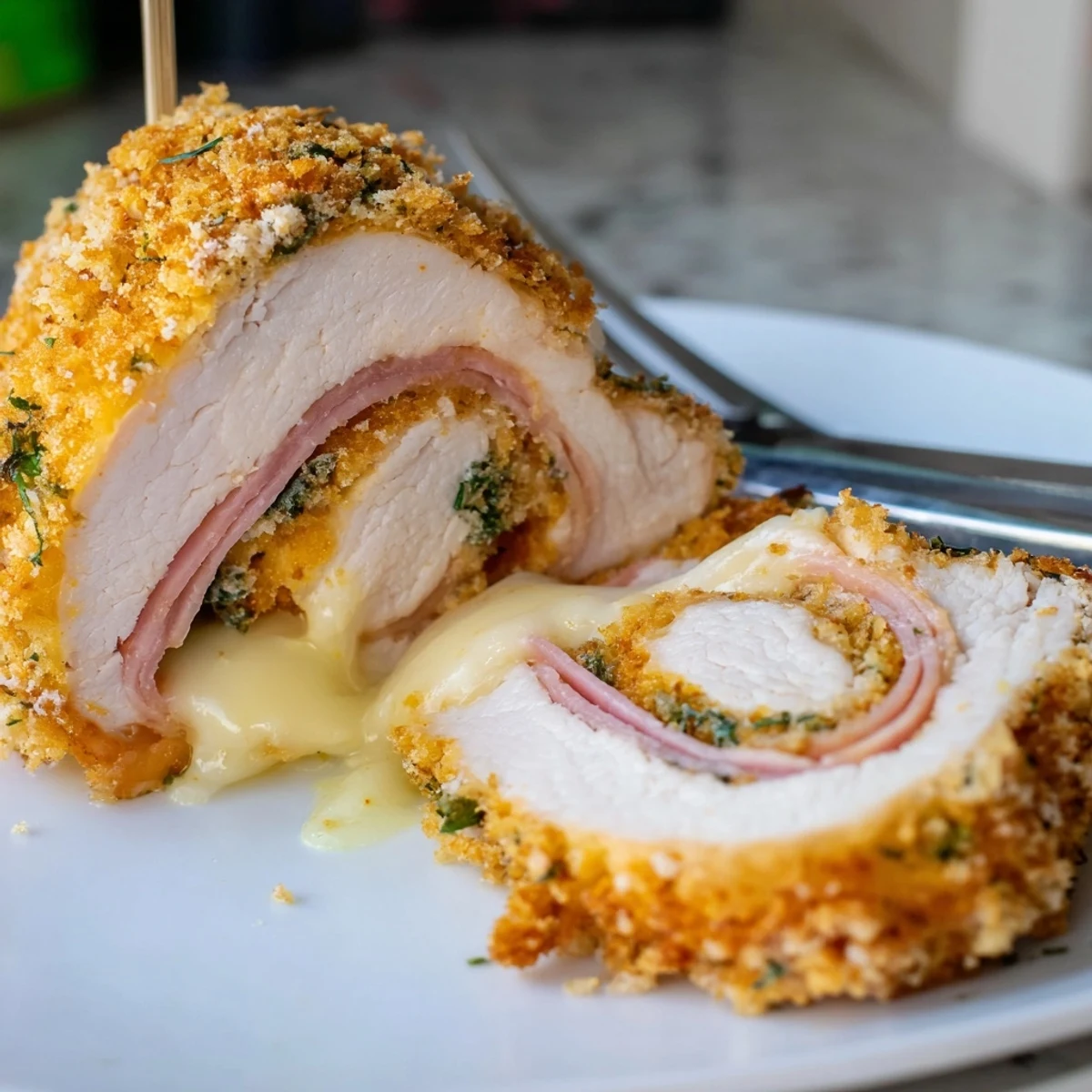
- Let the rolls rest for five minutes so the cheese settles, then remove toothpicks and slice into beautiful pinwheels while still hot.
 Save
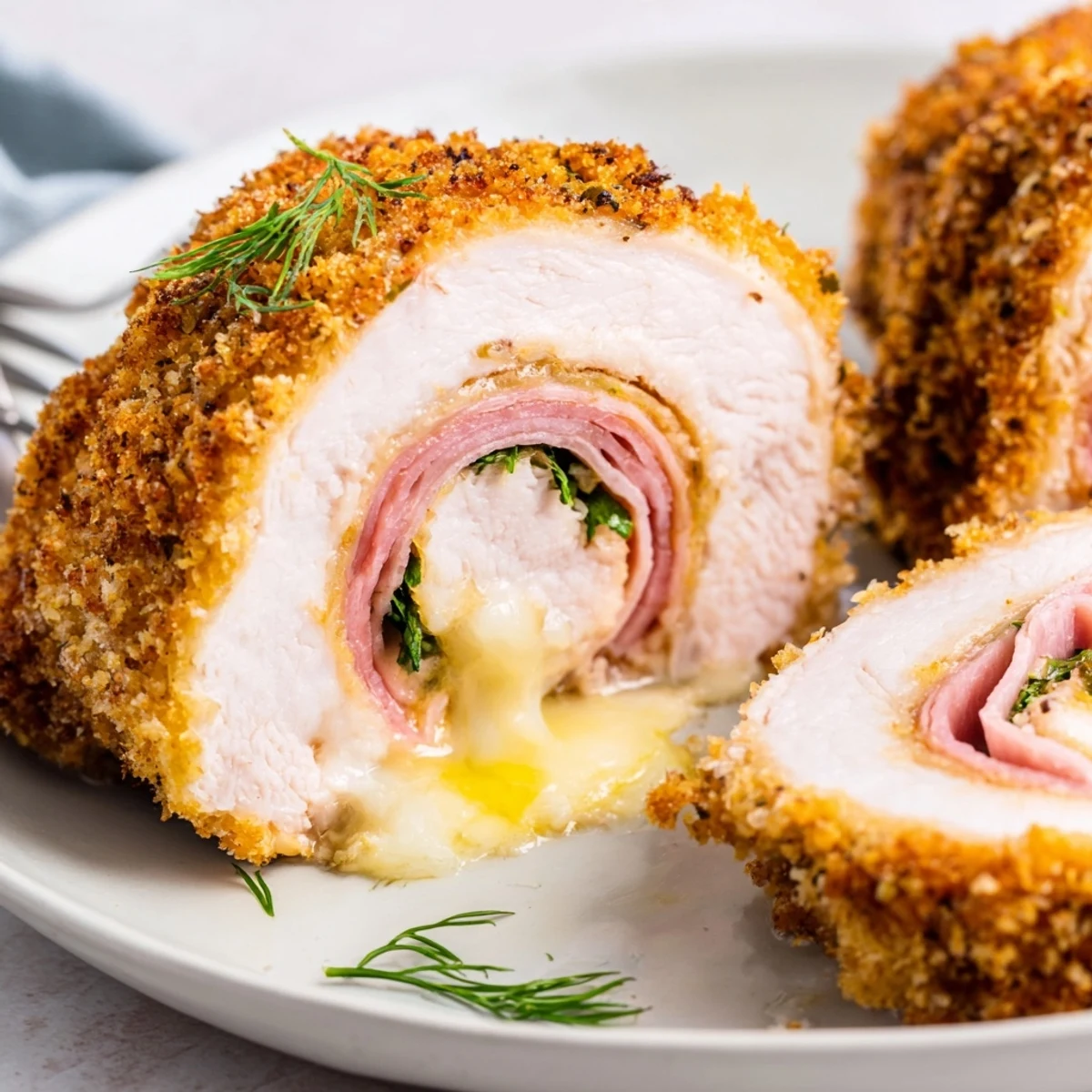
Save The first time I sliced into one of these rolls and the cheese stretched in a long golden strand, my kitchen felt like a place where magic was possible. That moment turned a random weeknight dinner into something I still get excited about months later.
What to Serve Alongside
A scoop of cold potato salad and something crunchy like coleslaw balances the richness of the chicken perfectly. In summer I add a simple tomato salad with olive oil and salt, and in colder months roasted vegetables do the job just as well.
Making It Your Own
Spicy pickle juice from jalapeno dill pickles transforms the whole flavor profile into something bolder without any extra work. You could also swap the ham for prosciutto, use pepper jack instead of Swiss, or fold a smear of cream cheese into the filling for extra creaminess.
Getting Ahead and Storing
These rolls can be assembled and breaded the night before, then stored uncovered in the fridge so the coating stays crisp until you are ready to cook. Leftovers reheat well in a hot oven or air fryer but never the microwave, which turns that beautiful crunch into sadness.
- Freeze uncooked breaded rolls on a sheet pan then transfer to a bag for up to three months, baking straight from frozen with extra time added.
- Always check the internal temperature with a thermometer because thickness varies and nobody wants undercooked chicken.
- Remember to remove every single toothpick before serving, especially if children are at the table.
 Save
Save Make these once and they will become part of your regular rotation, the kind of recipe people ask for by name. That pickle brine is the secret nobody will guess, and you can decide whether to tell them or not.
Recipe FAQs
- → How long should I brine the chicken?
-
Brine for at least 1 hour and up to 4 hours. One hour gives good flavor and a tender texture; longer times increase tenderness but can make the meat noticeably saltier if left too long.
- → What does pickle juice do to the meat?
-
Pickle juice adds acidity and salt that help break down proteins for a more tender bite, while imparting a bright, tangy flavor that pairs well with cheese and herbs.
- → Baking or frying — which yields better texture?
-
Frying gives the quickest, crispiest exterior; finish in the oven to ensure doneness. Baking is hands-off and lighter—drizzle with oil or melted butter and bake until deeply golden to approach the same crunch.
- → What cheeses or fillings work best?
-
Swiss or provolone melt nicely and balance the brine’s tang. Swap ham for prosciutto for salt and richness, or omit cured meat for a lighter option. Fresh dill or parsley adds brightness.
- → How can I make this gluten-free?
-
Use gluten-free all-purpose flour and gluten-free panko or crushed gluten-free crackers for the coating. Verify labels on breadcrumbs and any deli meats used.
- → What side dishes complement these rolls?
-
Serve with creamy potato salad, crisp coleslaw, or a simple green salad to balance the rich, tangy rolls. Mustard or a tangy yogurt-dill sauce also pairs well.