
 Save
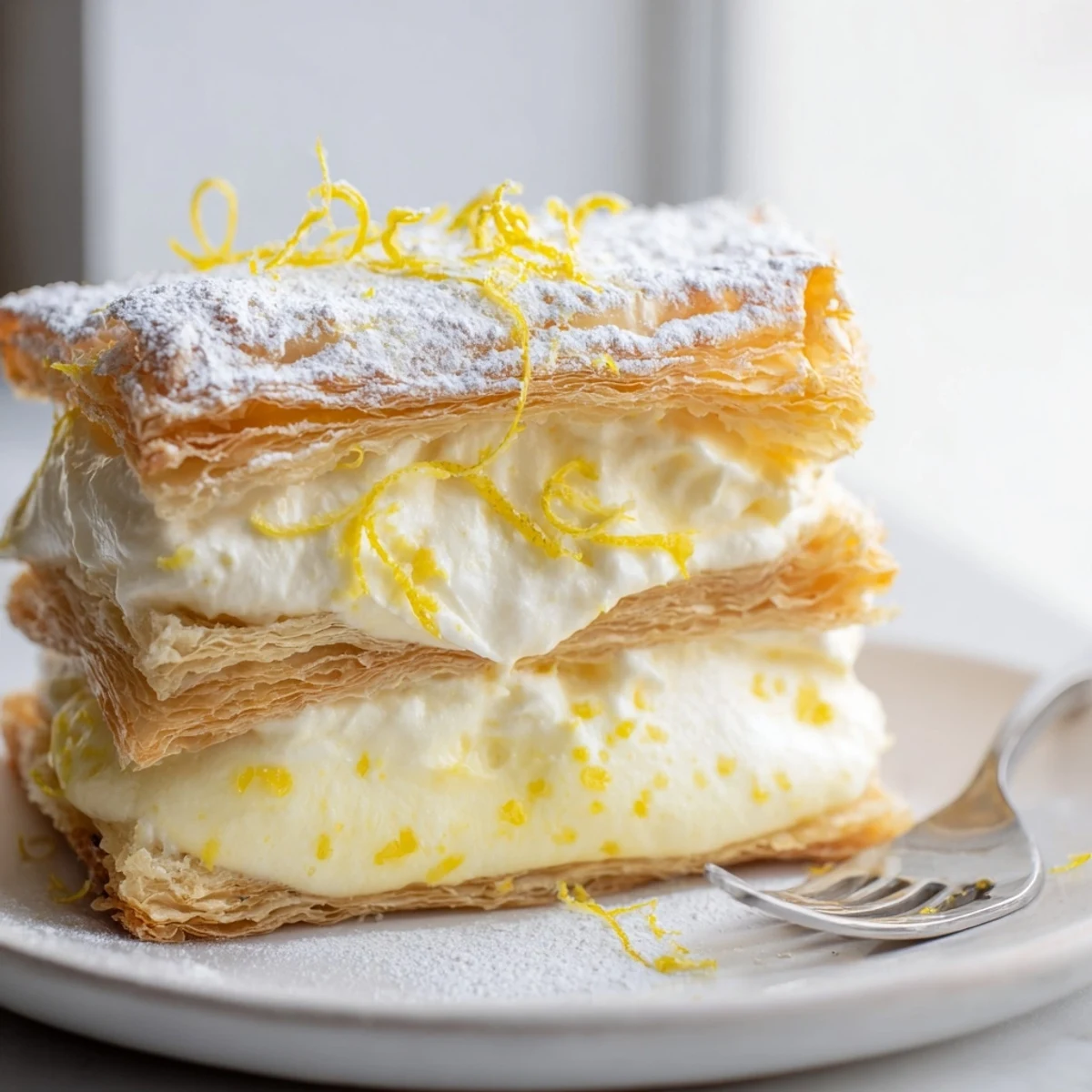
Save This elegant French mille feuuille features shatteringly crisp all-butter puff pastry baked until deeply golden, then layered with a luscious filling of whipped ricotta cheese brightened with fresh lemon zest and juice.
The ricotta mixture gets its airy richness from gently folded whipped cream, creating a cloud-like contrast against the crunchy pastry sheets.
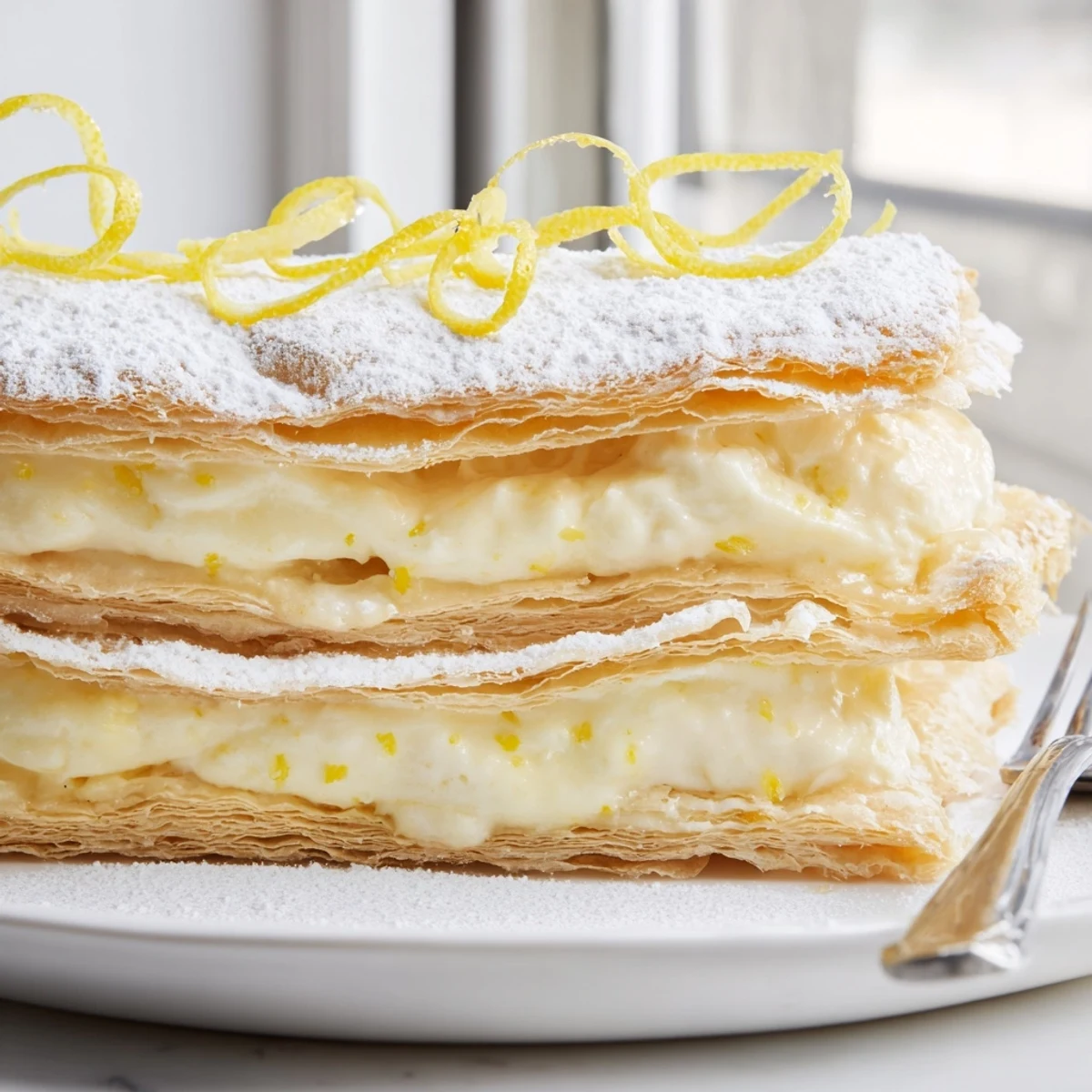
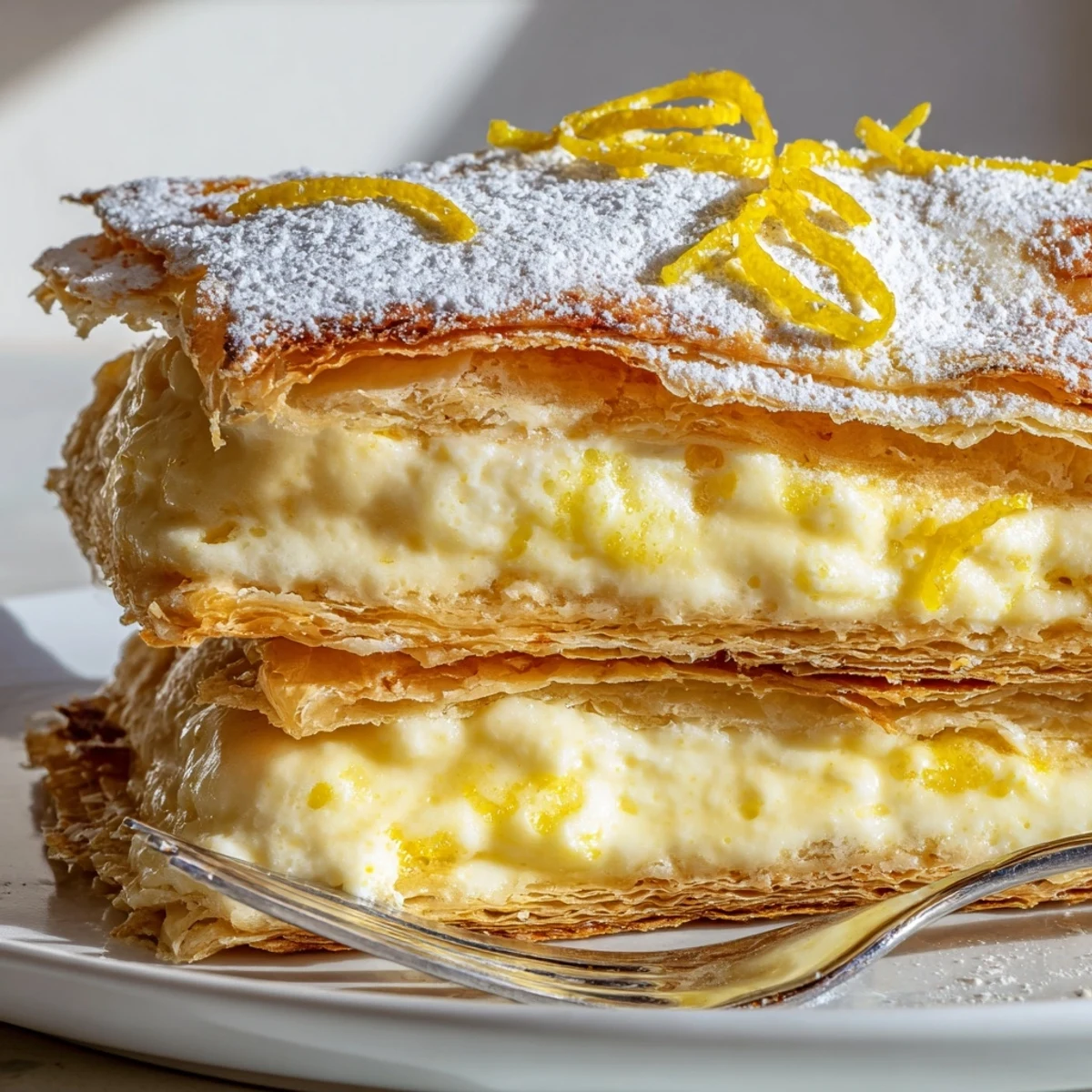
Finished with a snowy dusting of powdered sugar and optional lemon zest curls, each slice reveals beautiful defined layers. Serve chilled for the cleanest presentation.
The window was open and a warm breeze kept fluttering the parchment paper off the counter while I tried to assemble my first mille feuille. Lemon zest was everywhere, on my hands, the cutting board, probably the cat, and the whole kitchen smelled like a bakery on the Mediterranean coast. That first attempt was lopsided and leaking ricotta, but the taste was so revelatory that I stood at the counter eating the failed version straight off the plate with a fork. Some dishes earn their place in your permanent rotation not through perfection but through sheer, stubborn deliciousness.
I brought a platter of these to a friends rooftop gathering last summer, fully expecting them to disappear in ten minutes. Instead, everyone stood around holding their piece, turning it over, asking what exactly was in the cream because it tasted like something from a proper patisserie. My friend Marcos actually asked if I had secretly ordered them from a bakery and transferred them to my own plate, which remains one of the finest compliments I have ever received.
Ingredients
- All butter puff pastry (2 sheets, about 250 g each): Please use all butter if you can find it, because the flavor difference between butter pastry and the standard vegetable oil kind is enormous and you will taste it immediately.
- Ricotta cheese (400 g): Drain it in a fine mesh strainer for thirty minutes before using, because excess moisture will make your filling weep and turn the bottom pastry layer into a soggy disappointment.
- Powdered sugar (60 g plus 2 tbsp for dusting): The larger amount sweetens the filling and the smaller amount gets dusted over the top right before serving for that classic bakery finish.
- Zest of 2 lemons: Rub the zest into the powdered sugar with your fingers before mixing, because this releases the essential oils and creates a more fragrant, evenly distributed lemon flavor throughout the filling.
- Juice of 1 lemon: Fresh only, because the bottled stuff has a flat acidity that will make the filling taste sharp rather than bright and floral.
- Pure vanilla extract (1 tsp): A small amount rounds out the lemon without competing with it, like a quiet harmony note behind the melody.
- Heavy cream (120 ml): Whipped and folded in, it transforms dense ricotta into something cloud light and silky, and this step is not optional if you want the right texture.
- Lemon zest curls (optional): Use a vegetable peeler to strip long curls from a whole lemon, then slice them thinly for a garnish that tells people exactly what flavor awaits them.
Instructions
- Prepare your oven and sheets:
- Heat the oven to 200 degrees C (400 degrees F) and line two baking sheets with parchment paper, pressing the sheets flat so your pastry bakes evenly without warping.
- Prick and weigh down the pastry:
- Lay the puff pastry sheets on the prepared pans and dock them all over with a fork, then cover each with another sheet of parchment and an inverted baking sheet on top to keep them from puffing into wild, unusable mountains.
- Bake until deeply golden:
- Bake for 15 to 18 minutes, peeking under the top sheet near the end because you want a rich amber color, not pale blond, since darker pastry means more developed flavor and a crisper snap.
- Build the lemon ricotta cream:
- In a medium bowl, whisk together the drained ricotta, powdered sugar, lemon zest, lemon juice, and vanilla until completely smooth with no white streaks remaining.
- Whip and fold the cream:
- In a separate bowl, whip the heavy cream until it holds soft peaks that gently droop when you lift the whisk, then fold it into the ricotta mixture in three additions using broad, gentle strokes so you preserve every bit of air you just worked to create.
- Trim and cut the pastry:
- When the pastry is completely cool, use a sharp knife to trim the ragged edges and cut each sheet into three equal rectangles, giving you six total pieces with clean lines.
- Assemble the mille feuille:
- Place one pastry rectangle on your serving plate and spread a generous third of the ricotta filling over it, then repeat with a second layer of pastry and filling before crowning it with the final pastry sheet.
- Finish and chill:
- Dust the top with powdered sugar through a small sieve and scatter lemon zest curls if you are using them, then refrigerate for at least thirty minutes so the layers settle and slicing becomes a cleaner, less chaotic affair.
 Save
Save There is a particular kind of quiet that settles over a table when everyone is eating something delicate and wonderful and nobody wants to be the first to break the spell with words. I have watched people actually slow down their chewing while eating this, savoring each layer like it might be the last time they encounter something this texturally perfect. That is the real gift of a mille feuille, it asks you to pay attention.
The Pastry Makes or Breaks This
I have tested this recipe with cheap puff pastry and with the good all butter kind, and the results are so dramatically different that I would honestly rather skip making it than use the wrong one. All butter pastry flakes into distinct, shattering layers that taste like actual butter, while the standard kind often goes slightly tough and tastes vaguely of nothing. Spend the extra dollar and your mille feuille will taste like it came from a place that cares.
When Life Gives You Imperfect Layers
Your mille feuille will probably not look like the ones in French bakery windows on your first try, and that is completely fine because mine still do not look like that and I have made this recipe at least twenty times. The pastry cracks when you cut it, the filling oozes a little from the sides, and the powdered sugar never lands as evenly as you imagined it would. None of this matters even slightly once people taste it.
Ways to Make It Your Own
The beauty of a mille feuille is that the structure is a template waiting for your personal touch, and once you have the basic technique down you can start playing with flavors confidently. I have added thin slices of macerated strawberries between the layers in summer, and once I spread a thin layer of raspberry jam on the pastry before adding the cream, which was a revelation. The filling itself is equally flexible, and swapping half the ricotta for mascarpone gives you a denser, more indulgent result that feels closer to a proper dessert than a breakfast treat.
- Sweetened berries tucked between layers add a juicy pop that cuts through the richness beautifully.
- A glass of Prosecco or Moscato alongside turns a simple dessert into a tiny celebration.
- Keep your knife sharp and wipe it between each cut for the cleanest slices you can manage.
 Save
Save Some recipes become part of your story not because they are the most impressive thing you can make, but because they make you feel capable and generous every time you put them together. This is one of those recipes.
Recipe FAQs
- → Can I assemble the mille feuille ahead of time?
-
It's best to assemble no more than 2 hours before serving. The puff pastry gradually absorbs moisture from the ricotta filling and loses its signature crunch. You can bake the pastry sheets and prepare the filling separately a day in advance, then layer just before serving.
- → What can I substitute for ricotta cheese?
-
Mascarpone makes an excellent substitute for a richer, more indulgent filling. You can also use a blend of cream cheese and drained cottage cheese whipped until completely smooth. Keep in mind that mascarpone will produce a denser, more buttery result than ricotta.
- → How do I get clean, even layers when cutting?
-
Chill the assembled mille feuille for at least 30 minutes before slicing. Use a sharp serrated knife and gently saw through the layers using a back-and-forth motion rather than pressing straight down, which can compress the filling and cause the pastry to shatter unevenly.
- → Why do I need to weigh down the puff pastry while baking?
-
Placing a second baking sheet on top prevents the puff pastry from rising unevenly and forming large air bubbles. This technique ensures flat, uniform sheets that are easy to stack and layer, giving you that classic mille feuuille structure with defined, even tiers.
- → Can I freeze leftover assembled mille feuille?
-
Freezing is not recommended once assembled, as the ricotta filling will separate and become grainy upon thawing, and the pastry will go soggy. However, you can freeze the baked plain pastry sheets wrapped tightly in foil for up to one month, then thaw and assemble fresh.
- → What pairs well with this dessert for a dinner party?
-
A chilled glass of Prosecco or Moscato d'Asti complements the lemony sweetness beautifully. Fresh berries on the side add a bright, tart contrast. For a more elaborate presentation, drizzle plates with a thin streak of raspberry coulis before placing each slice.