
 Save
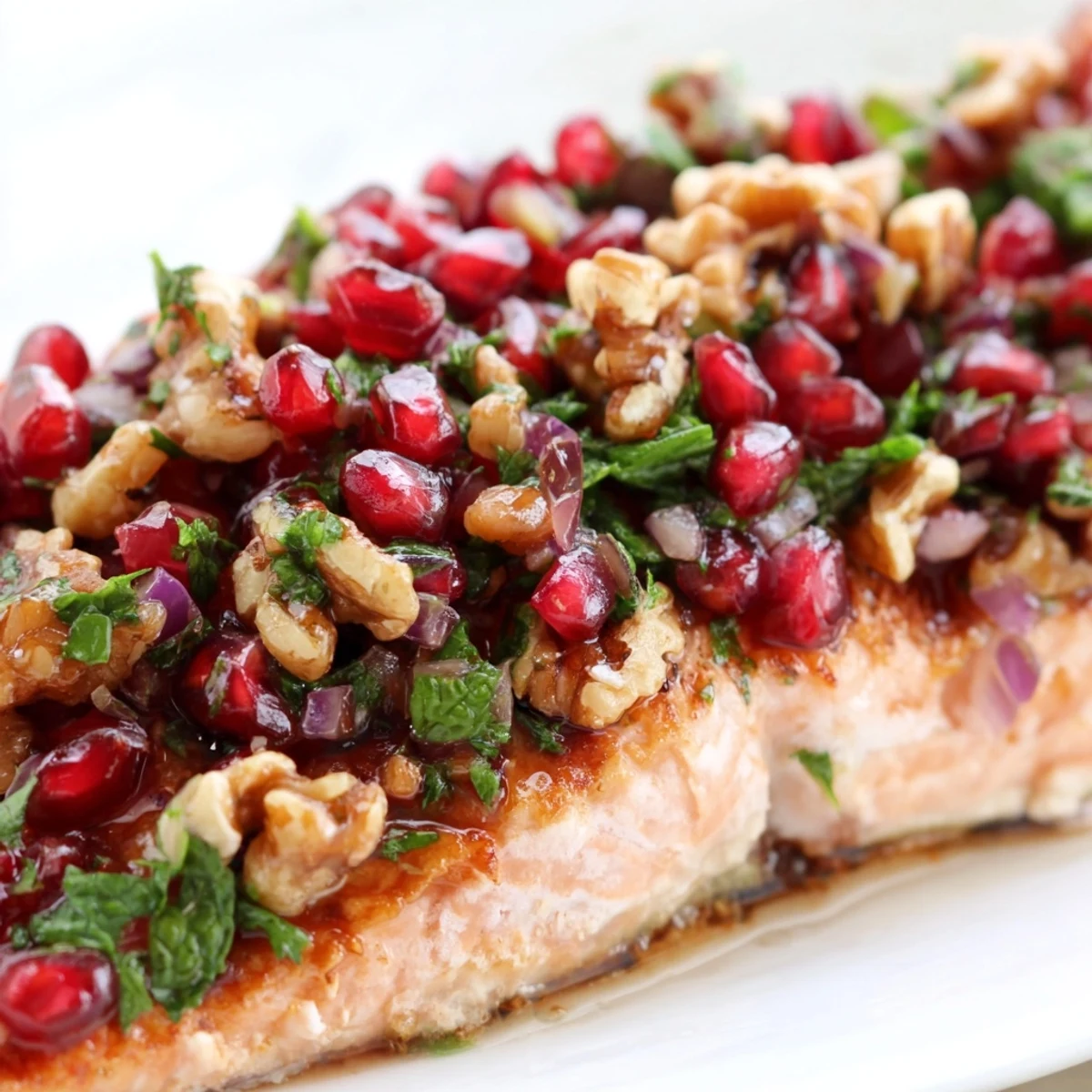
Save This dish features tender salmon fillets baked to flaky perfection, enhanced by a vibrant pomegranate walnut salsa. The salsa combines juicy pomegranate arils, crunchy walnuts, fresh herbs, and zesty lemon, delivering a delightful contrast of textures and flavors. This easy-to-make plate is perfect for a light, healthy Mediterranean-inspired dinner that balances richness and freshness.
I discovered this recipe on a Tuesday afternoon when my kitchen was flooded with golden light and I had three salmon fillets staring back at me from the counter. The pomegranate was sitting in a bowl nearby, its crimson seeds catching the sun, and something about that combination felt inevitable. That's when I realized the tartness and crunch could be exactly what salmon needed to feel less like dinner and more like an occasion.
I made this for friends who were visiting from out of town, and the moment they took their first bite, the whole table went quiet. Not awkward quiet, but the kind where everyone's concentrating on how good something tastes. Someone asked for the recipe before dessert even arrived, which meant I'd done something right.
Ingredients
- Salmon fillets: Use skin-on if you can handle it, because that crispy skin becomes golden and textured when baked.
- Olive oil: Good quality here makes a real difference; it coats the fish so evenly and picks up the lemon beautifully.
- Lemon zest and juice: The zest goes under the fish before baking, so it infuses directly into the flesh instead of just sitting on top.
- Sea salt and black pepper: Coarse salt crystals stick better than fine salt, and freshly ground pepper changes everything.
- Pomegranate seeds: Buy them already seeded if your time is tight; the juice stains are worth avoiding when you're rushing.
- Walnuts: Toast them lightly in a dry pan before chopping if you want them to taste even nuttier and more present in the salsa.
- Fresh herbs: Parsley and mint must be fresh; dried versions will make the salsa taste like medicine instead of brightness.
- Red onion: Finely dice it so the pieces are small enough to disappear into each bite rather than dominate it.
Instructions
- Heat your oven and prepare:
- Set it to 200°C and line a baking sheet with parchment paper so the fish doesn't stick and cleanup becomes almost invisible. You want everything ready before the salmon even touches the pan.
- Season and arrange the salmon:
- Place fillets skin-side down, brush with olive oil so they get a protective coating, then scatter the lemon zest over each one. The zest will become embedded in the fish as it bakes, creating flavor you can't achieve any other way.
- Bake until just cooked through:
- Twelve to fifteen minutes depending on how thick your fillets are; the fish should flake easily when you press it with a fork but still feel slightly tender in the center. Overcooked salmon becomes dense, and you'll regret it.
- Build the salsa while fish bakes:
- Combine pomegranate seeds, walnuts, parsley, red onion, and mint in a bowl, then dress gently with lemon juice, olive oil, salt, and pepper. Toss with your hands rather than a spoon so you don't crush the pomegranate seeds.
- Transfer and top:
- Move each fillet to a plate while it's still warm, then spoon the salsa generously over the top so the juices seep into the fish. Serve right away while everything is at its peak temperature and texture.
 Save
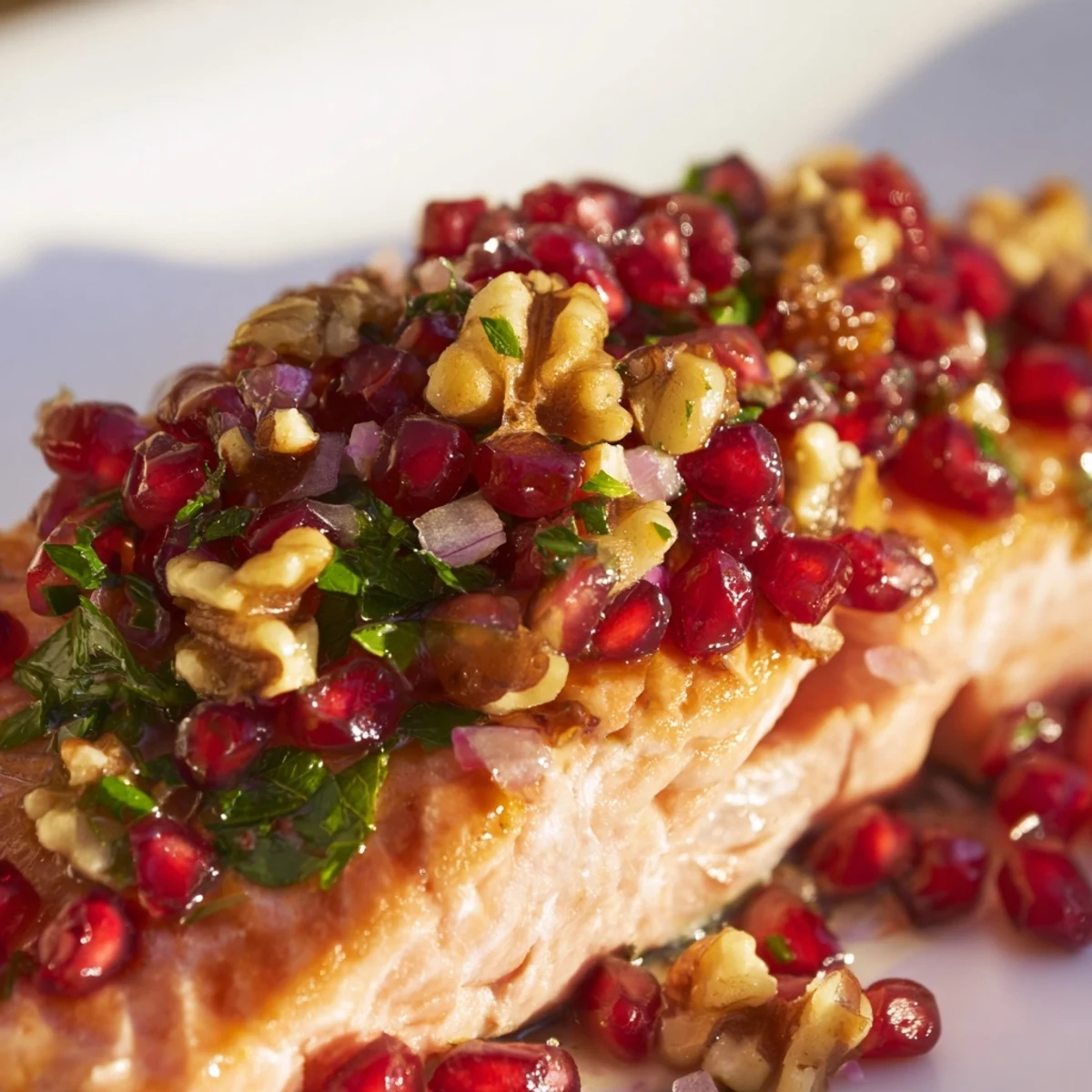
Save There's something about serving this dish that makes ordinary dinners feel special. The contrast between the warm, delicate salmon and that cold, tangy salsa creates a moment of real satisfaction on the plate.
Why This Combination Works
The natural oils in salmon can make the fish feel heavy on its own, but the acidity and crunch of pomegranate and walnuts cut through that richness completely. You're not fighting flavors; you're creating a conversation between them where each one makes the others taste better. It's the kind of balance that feels effortless once you taste it, though getting there required someone to believe in the pairing in the first place.
Timing and Temperature Secrets
Salmon is forgiving until it suddenly isn't, so watch the clock closely during those last few minutes of baking. The fish continues cooking even after you pull it out, so pulling it at twelve minutes instead of fifteen makes a real difference in how tender and buttery it stays. This is why I learned to trust the fork-test over the timer; every oven bakes differently, and your eyes are the most reliable kitchen tool you have.
Variations and Kitchen Flexibility
This recipe invites experimentation without losing its identity, which is exactly what I love about it. Pistachios work beautifully if walnuts aren't your thing, and a whisper of chili flakes or sumac can add depth without changing the core story. The salsa also tastes incredible on white fish, chicken, or even spooned over creamy goat cheese if you want to stretch it into an appetizer.
- Add a pinch of red pepper flakes to the salsa if you want warmth without overwhelming the delicate salmon.
- Try substituting pomegranate with dried cranberries and toasted pine nuts for a different seasonal version.
- Serve alongside roasted vegetables or soft grains to turn it into a complete meal that feels intentional rather than assembled.
 Save
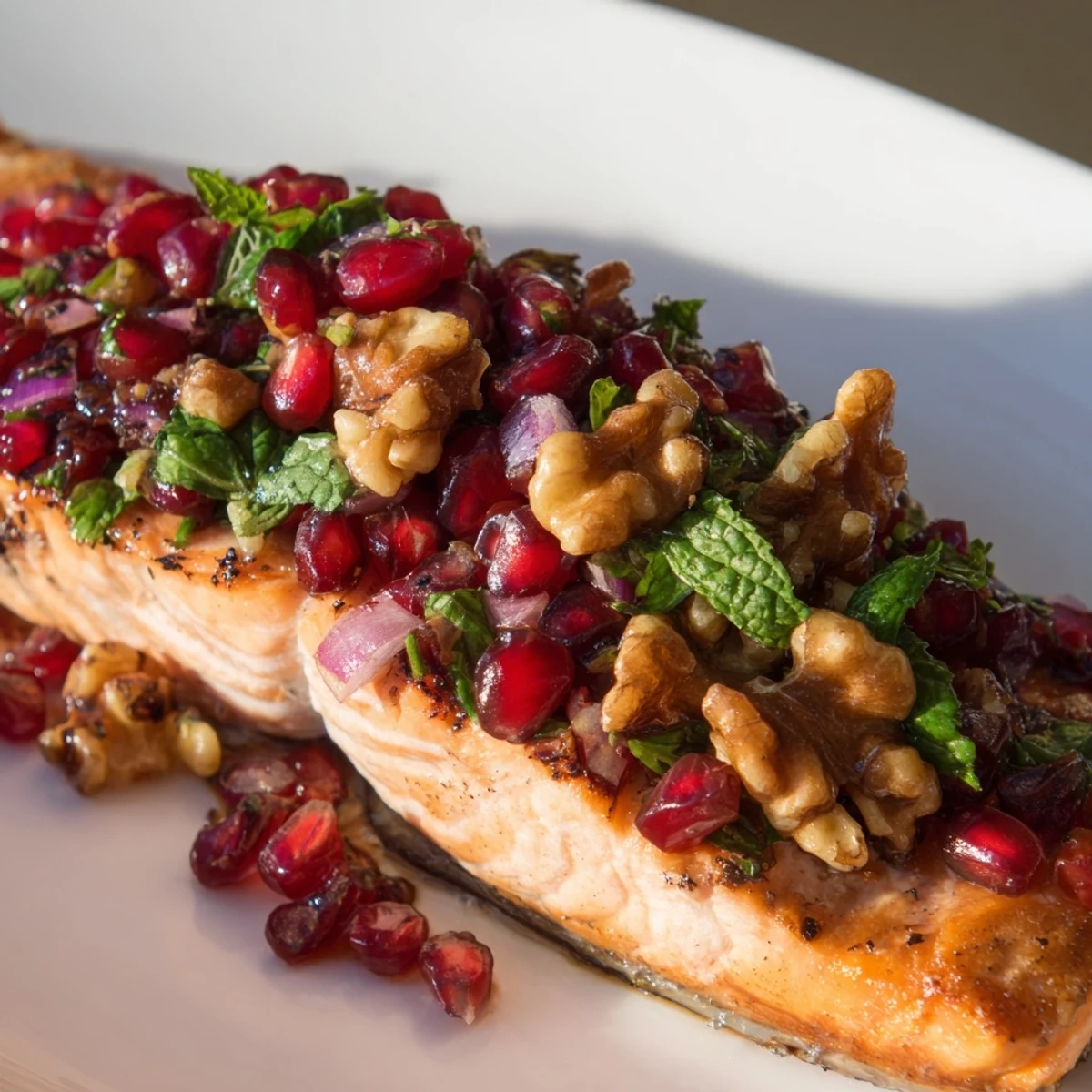
Save This meal became a favorite because it delivers restaurant-quality results from your own kitchen in thirty minutes flat. Every element matters, nothing is wasted, and you end up with a plate that looks and tastes like you know what you're doing.
Recipe FAQs
- → What temperature is best for baking salmon?
-
Preheat your oven to 200°C (400°F) for evenly cooked, tender salmon fillets with a slightly crisp edge.
- → Can I substitute walnuts in the salsa?
-
Yes, pistachios or pecans work well as alternatives, adding unique textures and flavors.
- → How do I keep the salmon moist while baking?
-
Brushing with olive oil and adding lemon juice helps retain moisture and infuses bright flavors.
- → What herbs are included in the salsa?
-
Fresh flat-leaf parsley and mint are combined for a refreshing and aromatic touch in the salsa.
- → Is this dish suitable for gluten-free diets?
-
Yes, it contains no gluten ingredients and fits gluten-free and dairy-free preferences.
- → What are good side dishes to serve with it?
-
Quinoa, couscous, or roasted vegetables complement the salmon and salsa beautifully.