
 Save
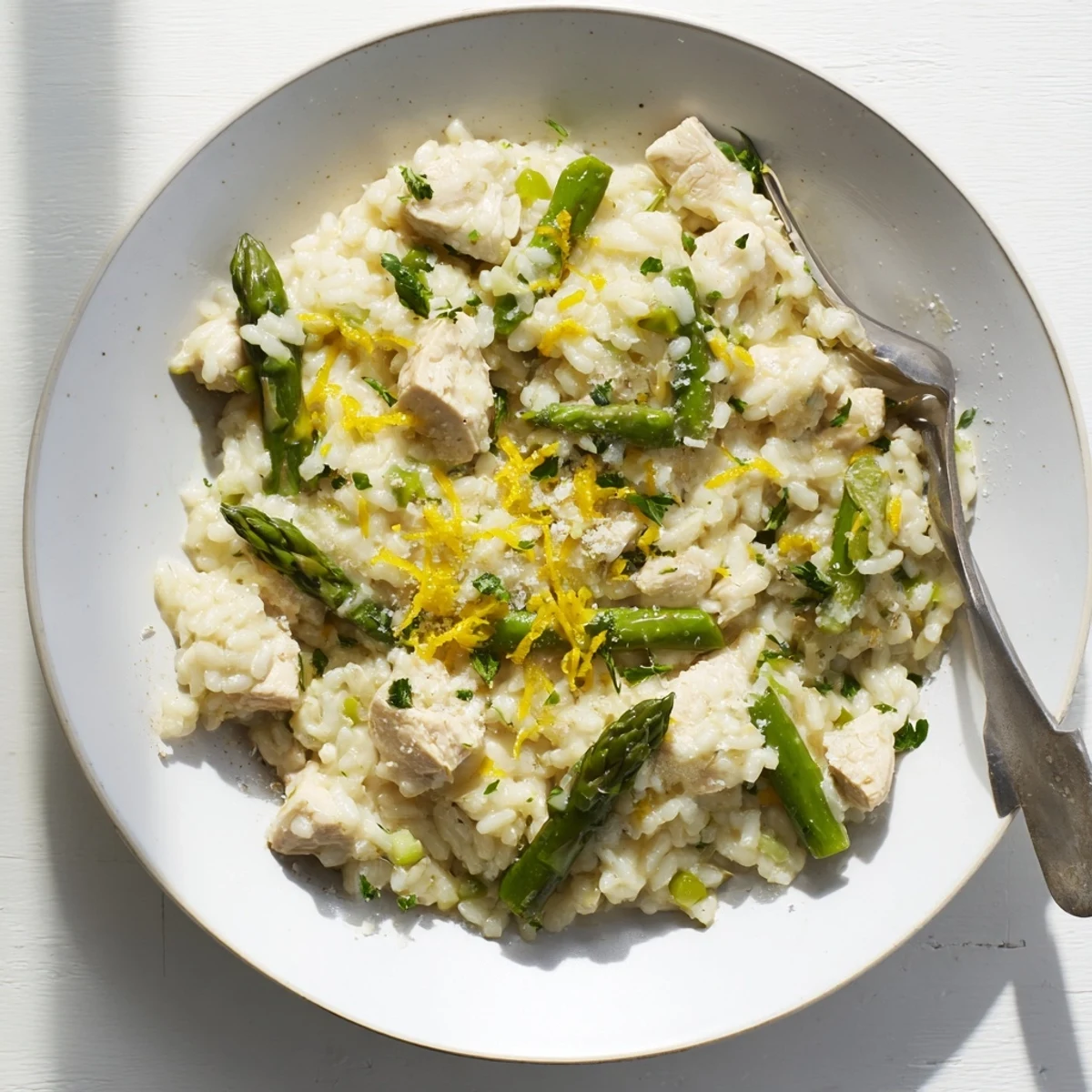
Save This classic Italian-inspired dish transforms Arborio rice into a luxuriously creamy texture through the traditional slow-cooking method. Tender diced chicken provides protein while fresh asparagus adds vibrant color and a slight crunch. The risotto achieves its signature consistency by gradually incorporating warm chicken stock, allowing the rice to release its natural starches. A finish of butter, aged Parmesan, and bright lemon zest balances the richness with acidity. Perfect for a special weeknight dinner or entertaining guests, this dish comes together in about 50 minutes with mostly hands-on stirring time.
I discovered this risotto on a rainy Tuesday when I needed something that felt like a hug but didn't require hours at the stove. The way the asparagus turns bright green against the creamy rice makes it look like something from a restaurant window. My roommate walked in and actually asked if I'd ordered takeout.
This became my go-to dinner when friends drop by unexpectedly last minute. The ritual of adding stock ladle by ladle is strangely meditative, and people always hover around the stove asking if they can help. Last spring I made it for my sister who claims to hate risotto, and she asked for seconds.
Ingredients
- Arborio rice: This short-grain rice releases starch slowly creating that signature creamy texture without adding cream
- Chicken breasts: Dice them slightly larger than you think you should since they shrink during cooking
- Asparagus: Choose stalks with tight heads and snap off the woody ends rather than cutting them
- Lemon zest: Use a microplane or vegetable peeler avoiding the bitter white pith beneath
- Warm chicken stock: Keep it simmering in a separate pan so adding cold stock doesn't shock the rice
- Parmesan cheese: Grate it fresh from a block rather than buying pre-grated for better melting
Instructions
- Crisp the chicken first:
- Season your diced chicken generously with salt and pepper then cook in olive oil until golden brown on all sides. This step builds flavor layers in the pan that will infuse the entire dish.
- Build your flavor base:
- Melt one tablespoon butter in the same pan and cook the onion until it becomes translucent and sweet. Add garlic last so it doesnt burn and turn bitter.
- Toast the rice grains:
- Add Arborio rice and stir constantly for two minutes until the edges turn translucent and you can smell a nutty aroma. This helps each grain hold its texture during cooking.
- Deglaze with wine:
- Pour in white wine and stir until the rice has absorbed every drop. Listen for the sizzling to stop which tells you the alcohol has cooked off completely.
- The slow addition:
- Add warm stock one ladleful at a time stirring frequently until most liquid is absorbed before adding more. This slow process is what creates that luxurious creaminess.
- Add vegetables halfway:
- Stir in asparagus pieces when the rice has cooked for about 15 minutes so they turn tender but still retain their bright green color and slight crunch.
- The finish:
- Return chicken to the pan then fold in butter Parmesan and lemon zest off the heat. Let everything rest covered for two minutes so the flavors meld together.
 Save
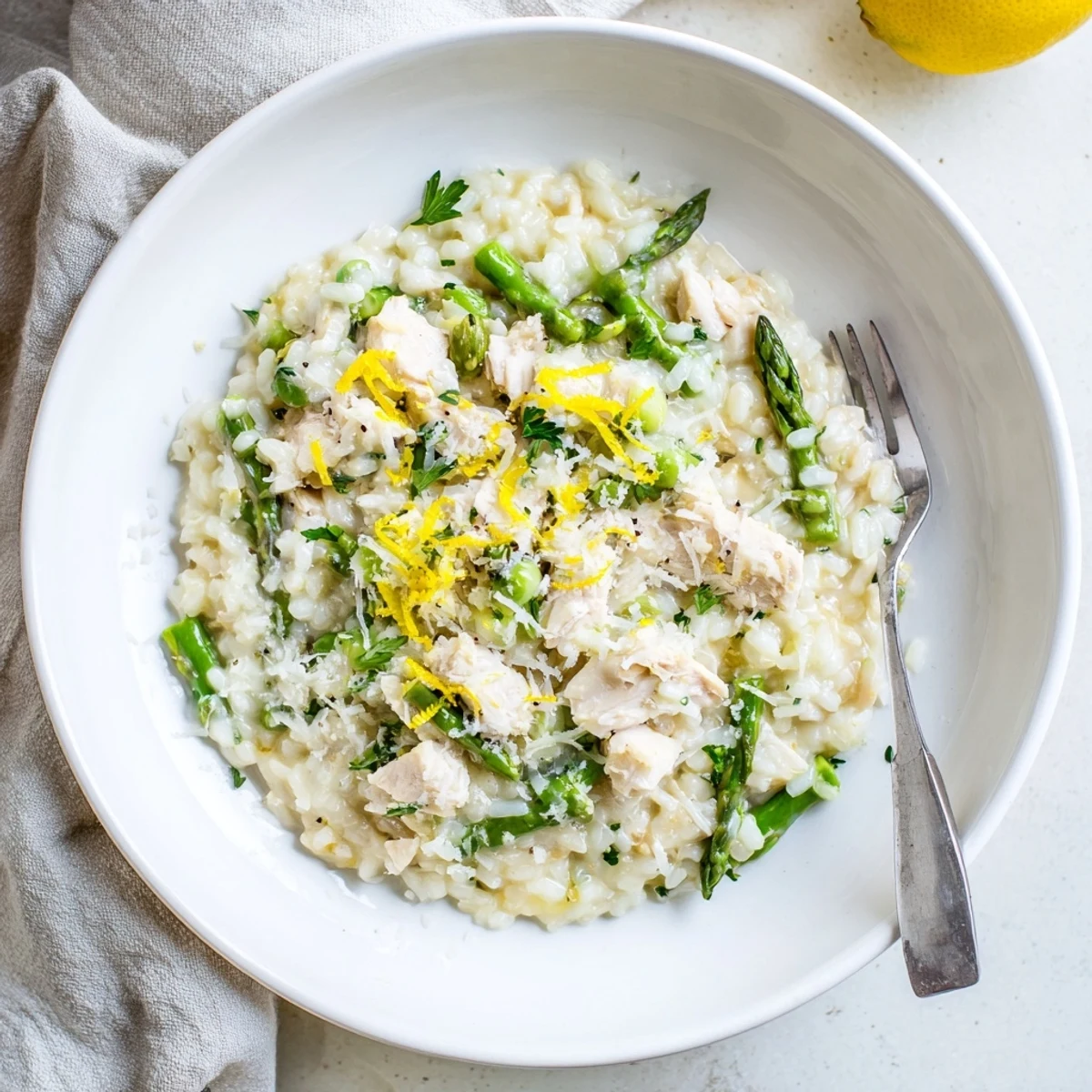
Save This recipe has become my secret weapon for dinner parties because it looks impressive but allows me to chat with guests while I stir. Something about standing at the stove with a glass of wine and a wooden spoon makes people gather around and tell stories while the kitchen fills with incredible smells.
Choosing the Right Asparagus
Thin spears work better here than thick woody ones since they cook in roughly the same time as the rice finishes. If you can only find thick asparagus consider blanching them for two minutes before adding to the risotto. The color contrast is worth the extra effort.
Making It Your Own
Pea shoots or fresh spinach work beautifully in spring while mushrooms add earthiness in fall. I've made this with shrimp instead of chicken and added a pinch of saffron to the stock for something completely different. The technique stays the same.
Wine Pairing That Works
The same white wine you cook with pairs perfectly at the table so buy an extra bottle while shopping. A crisp Pinot Grigio cuts through the richness while a buttery Chardonnay echoes theParmesan. Either way pour what you enjoy.
- Use a wooden spoon for stirring since metal can damage the rice grains
- Keep your stock warm in a separate pot not the microwave
- Grate extra Parmesan at the table because everyone always wants more
 Save
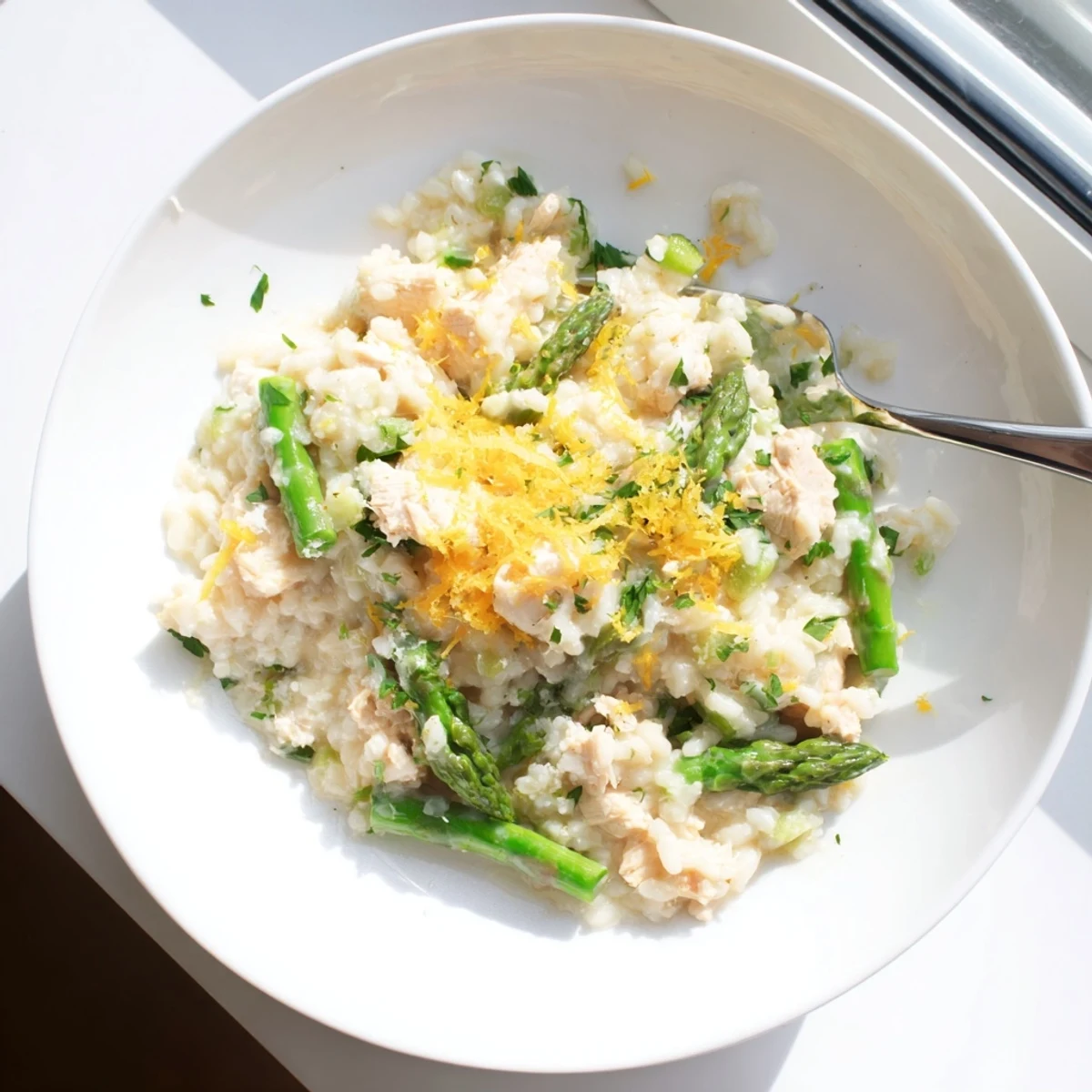
Save There's something deeply satisfying about cooking risotto the old way without shortcuts. Hope this brings warmth to your table too.
Recipe FAQs
- → What makes risotto creamy?
-
The creaminess comes from Arborio rice, which has high starch content. As you slowly add warm stock and stir constantly, the rice releases starch into the liquid, creating a naturally creamy sauce without any actual cream needed.
- → Can I use other vegetables instead of asparagus?
-
Absolutely. You can substitute peas, spinach, mushrooms, or roasted butternut squash. Add vegetables at the appropriate time so they cook through without becoming mushy.
- → Do I need to stir risotto constantly?
-
Frequent stirring is essential for proper texture. It helps release the rice's starches evenly and prevents sticking. You don't need to stir non-stop, but stir every minute or two while adding stock.
- → What can I substitute for white wine?
-
Additional chicken stock works perfectly as a non-alcoholic alternative. You could also use vermouth or leave it out entirely—the flavor will still be delicious thanks to the Parmesan and lemon.
- → How do I know when risotto is done?
-
Taste the rice—it should be tender but still have a slight bite in the center (al dente). The texture should be fluid and creamy, not stiff or dry. If needed, add another splash of stock before finishing.
- → Can I make this ahead of time?
-
Risotto is best served immediately while creamy. You can prep ingredients in advance, but for optimal texture, cook it just before serving. Leftovers can be reheated with extra stock to restore creaminess.