
 Save
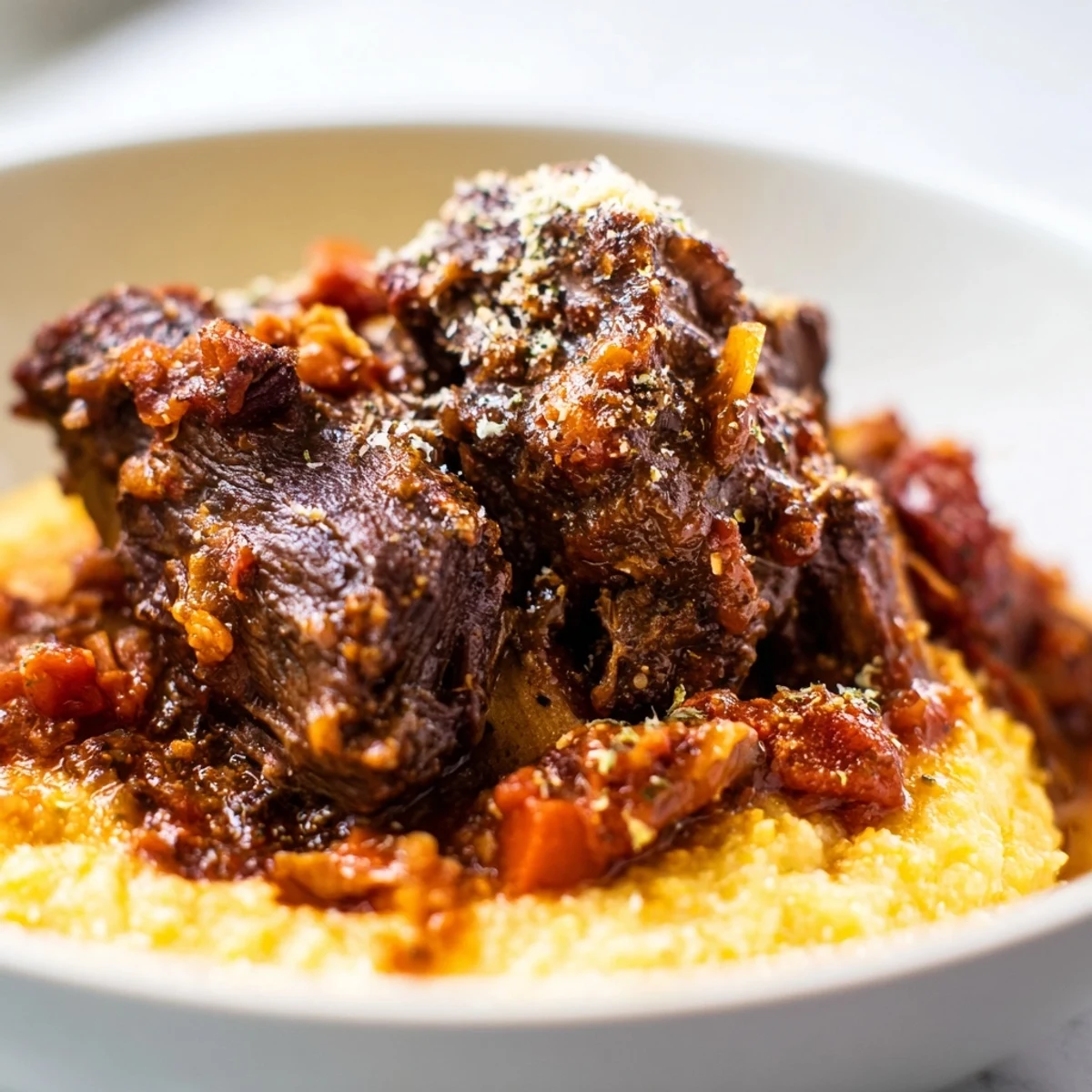
Save This dish features succulent braised beef short ribs cooked until tender and falling off the bone, served on a bed of creamy, buttery polenta. Carrots, celery, and onions build a rich base, while red wine, herbs, and beef broth add deep, savory flavor to the braising liquid. The polenta is slowly cooked with milk, butter, and Parmesan, achieving a smooth texture that perfectly complements the hearty meat. Ideal for comforting dinners and special gatherings alike.
There's a particular kind of quiet that settles over the kitchen when you've got something braising low and slow in the oven—the kind where you can actually hear yourself think. That's when I first made this dish, on one of those grey winter afternoons when the house smells like red wine and rosemary and suddenly feels like a restaurant. The short ribs fell apart with barely a touch of the spoon, and the polenta caught the light like something almost precious. It became the meal I make when I want to feel like I'm cooking something that matters.
I made this for a friend on a night when we both needed comfort more than conversation, and watching her face when that first bite happened—the soft meat, the butter, the wine-dark sauce—I realized this wasn't just dinner anymore. It became the dish I reach for when I want to say something without words, when food needs to do the talking.
Ingredients
- Bone-in beef short ribs (1.5–2 lbs / 700–900 g): The bones give everything deep, collagen-rich flavor—don't be tempted by boneless cuts, they won't taste the same.
- Olive oil: Use something you'd actually taste in a salad; it matters for the initial sear.
- Onion, carrots, and celery: This holy trinity builds the flavor foundation—don't skip any of them or rush the soffritto.
- Garlic (4 cloves, minced): Add it after the vegetables have softened so it doesn't burn and turn bitter.
- Tomato paste (2 tbsp): Let it caramelize for a moment in the pot; it deepens the entire braise.
- Dry red wine (1 cup / 240 ml): A wine you'd drink matters—cheap wine tastes cheap in the pot.
- Beef broth (2 cups / 480 ml): Homemade is glorious, but quality store-bought works if you can't make it.
- Fresh rosemary and thyme sprigs, bay leaves: These herbs are what separate braised meat from merely boiled meat.
- Polenta (1 cup / 160 g coarse cornmeal): Look for stone-ground polenta if you can find it—the flavor is noticeably better.
- Whole milk (1 cup / 240 ml): This is why the polenta becomes silk instead of paste.
- Unsalted butter (3 tbsp) and Parmesan cheese (½ cup / 50 g): Both add luxury; don't skimp on quality here either.
Instructions
- Get your oven and pot ready:
- Preheat to 325°F (160°C)—this low heat is the secret to ribs so tender they practically surrender. Season the short ribs all over with salt and pepper like you mean it.
- Sear the ribs until they're mahogany colored:
- Heat olive oil in a large Dutch oven over medium-high heat until it shimmers, then lay in the ribs. Don't move them around; let them sit for 3–4 minutes per side until a dark crust forms. This takes about 8–10 minutes total and is absolutely worth the patience.
- Build the flavor base:
- In the same pot, add diced onion, carrots, and celery. Cook for 5–7 minutes, stirring occasionally, until the vegetables soften and start to turn golden. Add the minced garlic and cook for just 1 minute more—you want fragrance, not browning.
- Deglaze and deepen:
- Stir in the tomato paste and let it sit for 2 minutes, allowing it to caramelize slightly. Pour in the red wine, scraping the bottom of the pot with a wooden spoon to release all those flavorful browned bits. Let it simmer for about 5 minutes until slightly reduced and more wine-sharp than sharp.
- Build the braising liquid:
- Add the beef broth, then tuck in the rosemary sprig, thyme sprigs, and bay leaves. Return the short ribs (and any juices that pooled on the plate) to the pot, nestling them back into the liquid until they're mostly submerged. Bring everything to a gentle simmer.
- Let the oven work its magic:
- Cover the pot and slide it into the preheated oven. Braise for 2½ to 3 hours, until the meat is so tender it falls away from the bone with the gentlest pressure. Check it once halfway through, but resist the urge to fiddle—low heat and time do the real work here.
- Make the polenta while everything braises:
- About 30 minutes before the ribs finish, bring 4 cups of water to a boil in a medium saucepan. Whisking constantly, add the polenta in a thin stream so it doesn't clump—this matters. Reduce heat to low and cook, stirring often with a wooden spoon, for 20–25 minutes until it's thick, creamy, and pulls away from the sides of the pan.
- Enrich the polenta:
- Stir in the milk, butter, and Parmesan cheese. Season with salt and pepper to taste. Keep it on very low heat, stirring occasionally and adding more milk by the splash if it gets too thick—polenta continues to thicken as it cools.
- Finish the sauce:
- Remove the short ribs from the braising liquid and set them aside. Discard the herb sprigs and bay leaves. Skim any excess fat from the sauce's surface and, if you prefer a thicker sauce, simmer it for a few minutes until reduced to your liking.
- Plate and serve:
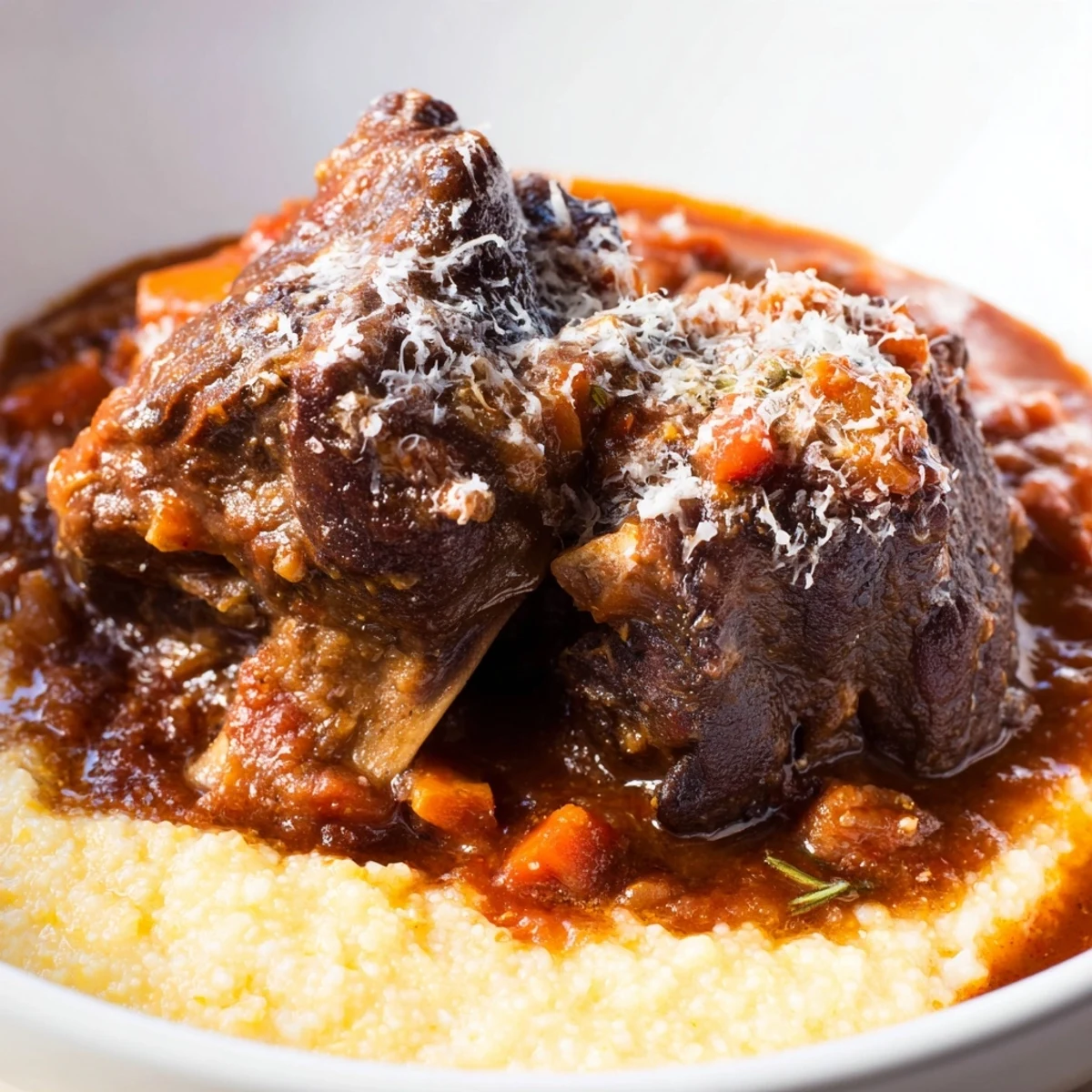
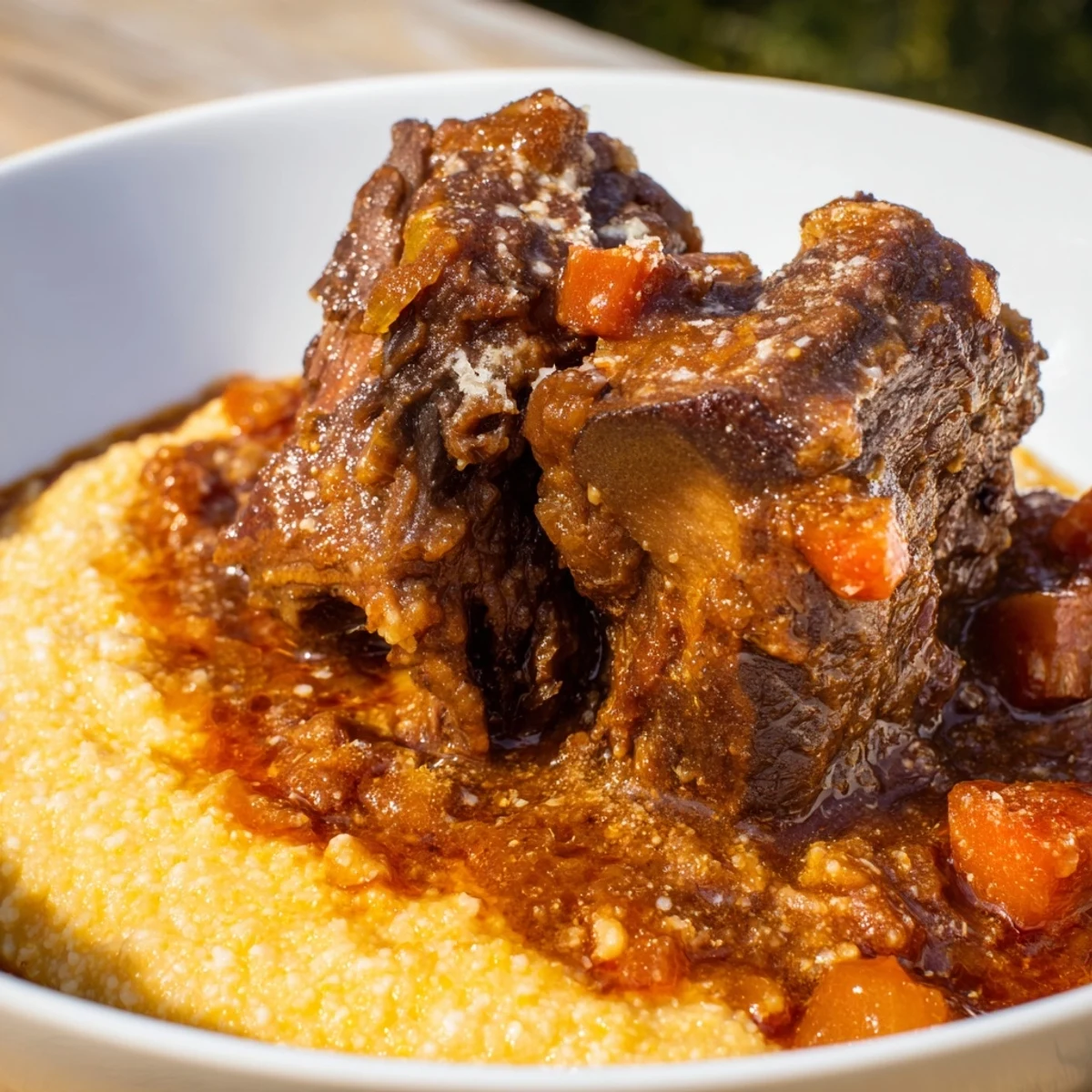
- Spoon creamy polenta into shallow bowls, top each with a short rib, and pour that precious braising sauce generously over everything. The polenta should be pillowy, the meat should be tender enough for a spoon, and the sauce should be rich and wine-dark.
 Save
Save There was an evening when my mother tasted this and went quiet for a long moment, fork halfway to her mouth, and I understood that sometimes the simplest dishes hold the most meaning. This became the meal I make for people I want to really feed.
Why This Pairing Works
Polenta and braised beef are an old marriage, one that makes complete sense the moment you taste them together—the soft grain catches the sauce, the richness of the meat deepens the creamy polenta, and together they become something more whole than either one alone. The buttery smoothness of the polenta acts as a gentle counterpoint to the deep, wine-dark intensity of the braise, and that's what makes the plate feel balanced and complete.
Timing and Make-Ahead Strategy
The beauty of this dish is that the short ribs actually taste better the next day—the flavors settle and deepen overnight, and the fat solidifies on top so you can skim it away easily. Braise the ribs up to two days ahead, store them in their liquid, then reheat gently before serving. The polenta must be made fresh and served immediately, but you can prepare all your ingredients beforehand and have them lined up, ready to go.
Wine, Sides, and the Details That Matter
Serve this with a wine that matches the braising wine—something robust like Barolo or Cabernet Sauvignon—and the whole experience becomes more refined. A simple side of steamed broccolini or a bright, peppery salad cuts through the richness without competing for attention, and a piece of crusty bread wouldn't be unwelcome for soaking up that beautiful sauce. The polenta is rich enough that you don't need much else, but these small touches make the meal feel intentional.
- Substitute the Parmesan with Pecorino Romano if you want a sharper, more assertive cheese flavor.
- A splash of heavy cream stirred into the polenta at the end makes it even more luxurious.
- Always check that your broth and cheese are labeled gluten-free if you're serving someone who needs it.
 Save
Save This is the kind of meal that reminds you why you cook in the first place—not for fuss or complexity, but for the moment when everyone at the table slows down and really tastes what's in front of them. Make it when you have time to let things happen at their own pace.
Recipe FAQs
- → How do I achieve tender beef short ribs?
-
Slow braising in a covered pot at low oven heat allows the connective tissue to break down, resulting in fall-off-the-bone tenderness.
- → What is the best way to cook creamy polenta?
-
Gradually whisk coarse cornmeal into boiling water and cook on low heat, stirring often, until thick and smooth before adding milk, butter, and cheese.
- → Can I substitute Parmesan cheese in the creamy polenta?
-
Yes, Pecorino Romano works well for a sharper, saltier flavor that complements the richness of the dish.
- → What wine pairs best with this dish?
-
Robust reds like Barolo or Cabernet Sauvignon enhance the savory braised beef and creamy polenta flavors.
- → How should the braising liquid be prepared for the best flavor?
-
Sauté aromatics, deglaze with dry red wine, then simmer with broth and herbs before adding the beef short ribs to deepen the sauce.