
 Save
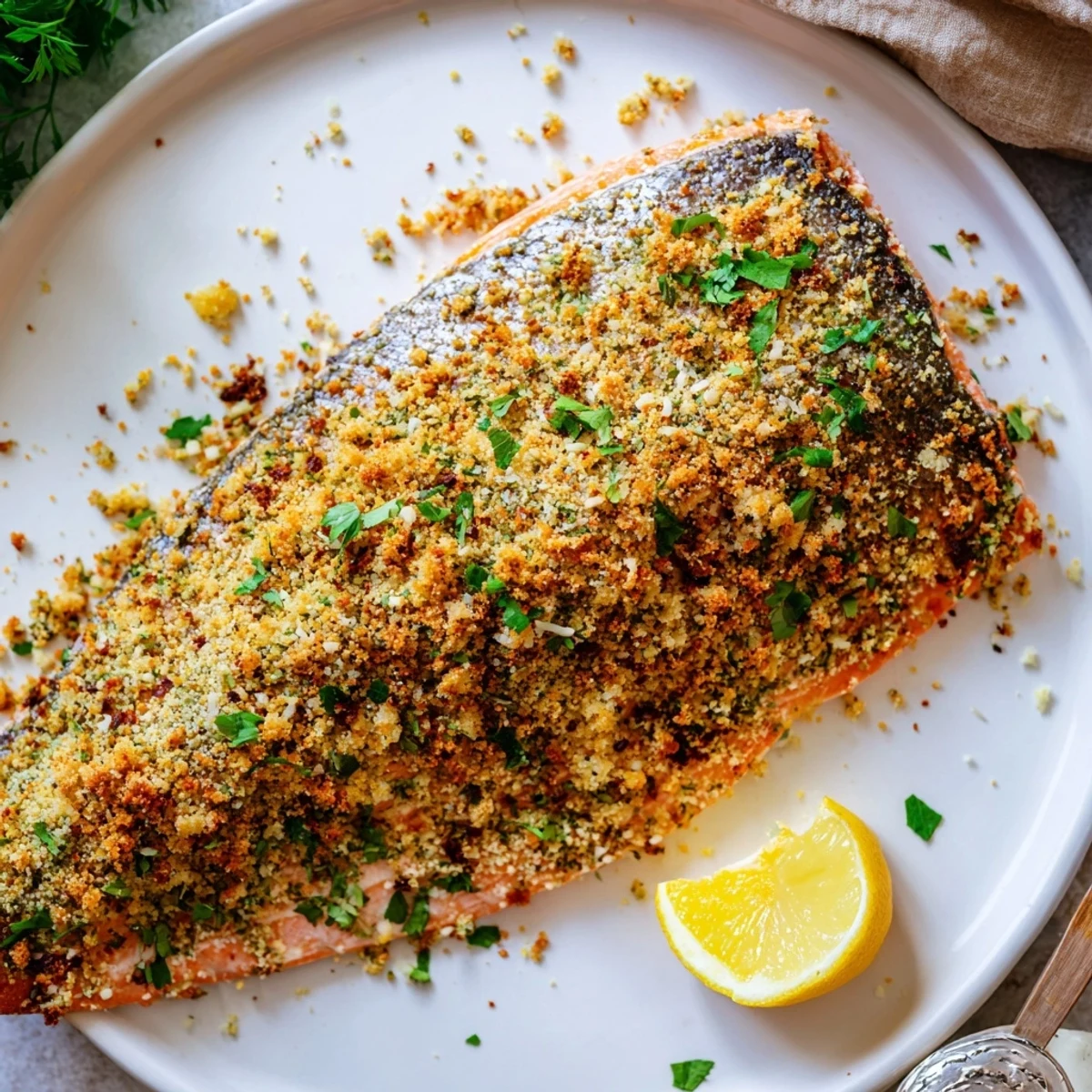
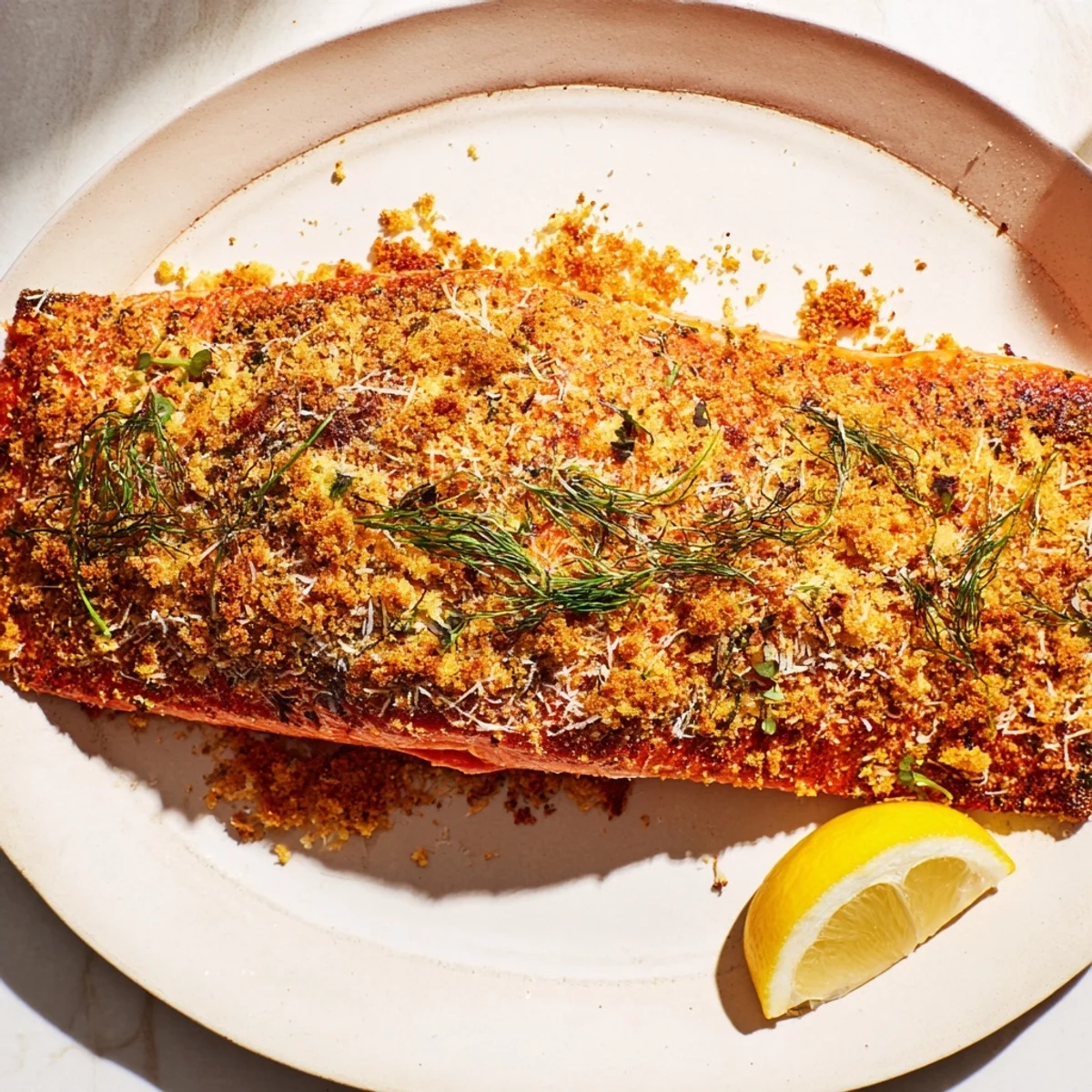
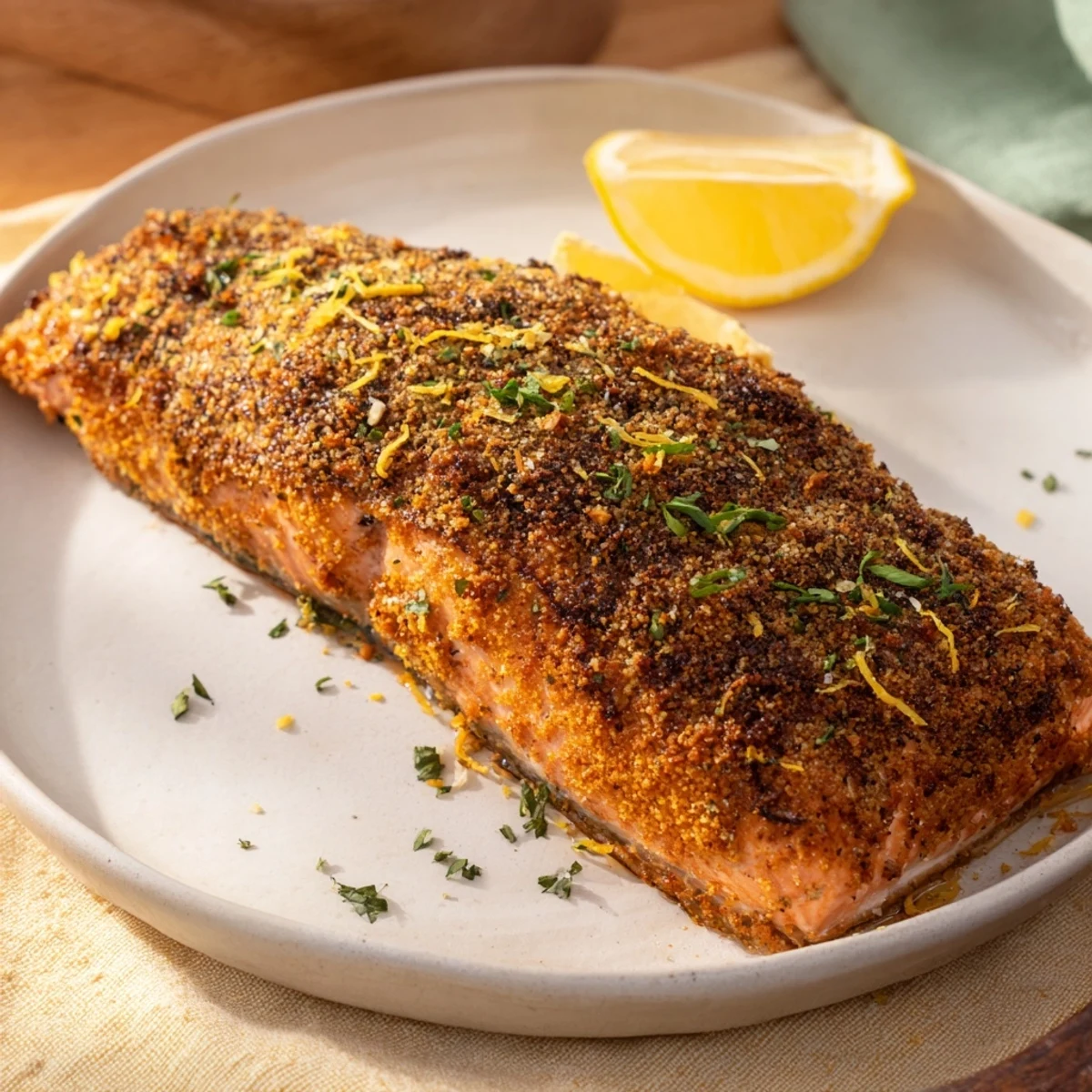
Save This dish features juicy salmon fillets coated in a fresh herb and breadcrumb mixture, including parsley, dill, and lemon zest, creating a crisp crust when baked. Coated with Dijon mustard to help the crust adhere, it’s baked until golden and tender inside. Serve with lemon wedges to enhance the flavors. The preparation is simple and quick, ideal for an easy yet impressive main course with a delicious balance of textures and bright herbal notes.
There's something magical about the moment when a plain salmon fillet transforms under a golden crust, and I discovered this recipe quite by accident one Tuesday evening when I had guests coming and nothing prepared. I'd found a package of day-old bread in the pantry and some fresh herbs wilting on the windowsill, and somehow the combination felt right. Twenty minutes later, as everyone was digging in and the kitchen filled with the smell of toasted herbs and melting Parmesan, I realized I'd stumbled onto something I'd be making again and again.
I remember my neighbor stopping by while I was making this, drawn by the aroma of toasting breadcrumbs and fresh dill drifting through the shared hallway. She watched me press the herb crust onto the fillets, skeptical at first, then asked if she could taste it when it came out of the oven. She ended up texting me the recipe request that same night and making it for her daughter's birthday dinner.
Ingredients
- Salmon fillets (4, about 150 g each, skinless and pin-boned): Look for fillets that are evenly thick so they cook uniformly, and don't skip the pin-boning step or you'll bite into something unpleasant.
- Fresh breadcrumbs (80 g from day-old bread): Day-old bread is key here because fresh bread turns gummy; if you must use fresh, let it dry out in a low oven first.
- Fresh parsley and dill (2 tbsp and 1 tbsp respectively, finely chopped): Fresh herbs are non-negotiable for this; dried ones turn bitter when toasted on top of the fish.
- Lemon zest (1 tsp): This brightens the whole dish without adding moisture that could make the crust soggy.
- Garlic clove (1, minced): One clove is enough; more than that and it overpowers the delicate salmon and herb flavors.
- Grated Parmesan cheese (40 g): The Parmesan adds a nutty depth and helps the crust turn golden, so don't skimp or substitute with the pre-grated stuff.
- Olive oil (2 tbsp): This binds everything together and creates that wet-sand texture that adheres beautifully to the fish.
- Salt and black pepper (½ tsp and ¼ tsp): Season with a light hand since the Parmesan and mustard already bring saltiness.
- Dijon mustard (1 tbsp): The mustard acts as edible glue and adds a subtle tang that complements the herbs without screaming mustard flavor.
- Lemon wedges (for serving): Fresh lemon at the table lets everyone adjust the brightness to their taste.
Instructions
- Set your oven and prepare:
- Preheat to 200°C (400°F) and line a baking sheet with parchment paper so nothing sticks and cleanup is effortless. This high heat creates that golden crust while keeping the inside of the salmon tender.
- Mix your herb crust:
- In a bowl, combine breadcrumbs, parsley, dill, lemon zest, garlic, Parmesan, olive oil, salt, and pepper until it looks like wet sand with flecks of green throughout. If it seems too dry, add another drizzle of oil, but be subtle about it.
- Dry and arrange the salmon:
- Pat each fillet dry with paper towels because moisture is the enemy of crispiness, then arrange them on your prepared sheet in a single layer. Give them a little space so hot air circulates around each one.
- Apply the mustard base:
- Brush the top of each fillet with Dijon mustard in an even, thin layer; you want enough to bind the crust but not so much that it pools and makes things soggy.
- Press on the crust:
- Take a generous handful of your herb mixture and press it firmly onto the mustard-coated side of each fillet, using gentle pressure so it adheres without compressing. A little spice or herb texture peeking through is perfect.
- Bake to golden perfection:
- Slide into the oven for 12–15 minutes until the crust is deep golden brown and the salmon flakes easily at the thickest part, with an internal temperature around 52–55°C (125–130°F). Don't overbake or the fish dries out.
- Serve immediately:
- Plate right away while the contrast between crispy crust and tender salmon is at its peak, with fresh lemon wedges on the side.
 Save
Save One Saturday I made this for my family and my five-year-old nephew, who normally avoids fish, actually asked for seconds. He loved the crunch of the crust so much he forgot to be suspicious, and suddenly everyone was talking about how the meal felt restaurant-quality but tasted like home.
Why the Crust Works
The magic of this dish comes down to layering flavors and textures in a way that feels simple on the plate but intentional in every bite. The mustard acts as both glue and subtle flavor layer, while the oil in the breadcrumb mixture creates steam that helps the fish cook gently inside while the crust crisps on the outside. Fresh herbs wake up under the heat, Parmesan adds umami depth, and lemon zest brightens everything without making it acidic or wet.
Timing and Temperature Matters
I used to guess at when the salmon was done until I realized that salmon doesn't need to be cooked through completely to be safe and delicious. At 52–55°C (125–130°F) the center is still slightly translucent and buttery, and it continues cooking a little after you pull it from the oven. This resting carryover means you get that perfect texture instead of the dry, chalky salmon that overcooked fillets give you.
Customizing Your Crust
The beauty of this recipe is that it's a framework you can play with once you understand how the pieces fit together. I've swapped parsley for tarragon on days when I wanted something more elegant, added fresh chives for a milder onion note, or even thrown in a pinch of paprika when I was feeling adventurous. The key is maintaining that wet-sand texture of the crust mixture so it adheres and crisps properly.
- Try panko breadcrumbs for extra crunch, but add it slowly since panko absorbs less oil than regular crumbs.
- Fresh chives, tarragon, or a mix of tender herbs all work beautifully; just avoid dried herbs which turn harsh and bitter.
- Grated lemon or orange zest both add brightness, and a tiny pinch of red pepper flakes brings unexpected warmth if you like subtle heat.
 Save
Save This salmon has become my go-to when I want to feel capable in the kitchen without spending hours there, and it never fails to make dinner feel like something worth celebrating. Serve it with a crisp salad or roasted vegetables, maybe a chilled glass of Sauvignon Blanc, and watch how quickly everyone gathers around the table.
Recipe FAQs
- → What herbs are used for the crust?
-
Fresh parsley and dill are finely chopped to provide a bright, herby flavor coating the salmon.
- → Can I use panko instead of regular breadcrumbs?
-
Yes, using panko adds an extra crunchy texture to the crust for added crispness.
- → How do I ensure the crust sticks to the salmon?
-
Brushing the fillets with Dijon mustard before applying the herb-breadcrumb mixture helps it adhere well during baking.
- → What internal temperature should the salmon reach?
-
The salmon is perfectly cooked when it reaches an internal temperature of about 52–55°C (125–130°F), ensuring a tender texture.
- → What sides pair well with this dish?
-
Complementary sides include crisp green salads, roasted vegetables, or light white wines like Sauvignon Blanc or Chardonnay.